East Bengal, Mohun Bagan, and their Durand Legacy
East Bengal, Mohun Bagan, and their Durand Legacy
The oldest rivalry opens the oldest Trophy: Kolkata derby to kickstart 135th IndianOil Durand Cup
The Durand Cup: Before the World knew their NAMES
Rooted in Kolkata, Reaching Five States: The Durand Cup’s Modern Expansion
Kolkata welcomes 135th IndianOil Durand Cup trophies as countdown begins to tournament kick-off
Jharkhand embraces 135th IndianOil Durand Cup as Trophy Tour marks Ranchi’s historic debut as host venue
Assam reaffirms commitment to football as 135th IndianOil Durand Cup Trophy Tour reaches Guwahati
Hon’ble Governor Shri Ajay Kumar Bhalla and Hon’ble Chief Minister Shri Yumnam Khemchand Singh Lead Imphal’s Celebration of 135th IndianOil Durand Cup Trophy Tour
The Durand Cup: 138 Years, One enduring story
Hon’ble Minister of Sports and Youth Affairs, Shri Wailadmiki Shylla Flags Off Shillong Leg of 135th IndianOil Durand Cup trophy tour
It was the 71st minute, and the air inside the Vivekananda Yuba Bharati Krirangan hung heavy, with the suffocating humidity of late summer and an unbearable tension. The date was September 3, 2023. Mohun Bagan Super Giant had been reduced to ten men after Anirudh Thapa’s expulsion near the hour mark. Across the pitch, East Bengal sensed blood in the water. This was the 132nd Durand Cup final, and the Red and Gold brigade believed this was their moment to finally eclipse their eternal rivals and secure the ultimate bragging rights. But Kolkata derbies, especially those contested with the oldest football trophy in Asia on the line, are rarely governed by tactical logic or numerical advantage; they are authored by sheer will and moments of individual genius.
Enter Dimitri Petratos.
Collecting the ball deep, the Australian forward surged forward. With a sudden, explosive swing of his left foot, Petratos sent the ball hurtling from outside the box, past the despairing dive of the goalkeeper, and into the back of the net. The stadium erupted in a deafening, visceral crescendo of green and maroon joy.
For Argha Bandyopadhyay, the Honorary Secretary of the Calcutta Sports Journalists’ Club, that thunderous strike shattered decades of agonizing wait. Sitting in the press box, the professional facade momentarily gave way to raw, unadulterated emotion. “When Petratos scored, the sheer relief and ecstasy were indescribable,” Bandyopadhyay reflects. “After 23 long years of waiting in this specific tournament, to win it against East Bengal, and that too with ten men on the pitch, it felt like the ultimate redemption. That deafening roar from the stands wasn’t just joy; it was the release of over two decades of pent-up frustration.”
As Petratos wheeled away in celebration, the roaring galleries immediately christened him, the new Jose Ramirez Barreto had arrived. Mohun Bagan secured a 1-0 victory, and the legend of the Derby had claimed another eternal protagonist.
To understand the gravity of that strike and the raw emotion in Bandyopadhyay’s voice, one must understand the crucible that is the East Bengal and Mohun Bagan rivalry within the Durand Cup. It is a clash of identities, histories, and pride that transcends the sport itself, dictating moods, disrupting traffic, and dividing households across the state. When these two titans collide, the rest of the Indian footballing calendar fades into a muted background. And in the context of the Durand Cup, the stakes are magnified to a near-mythological scale.
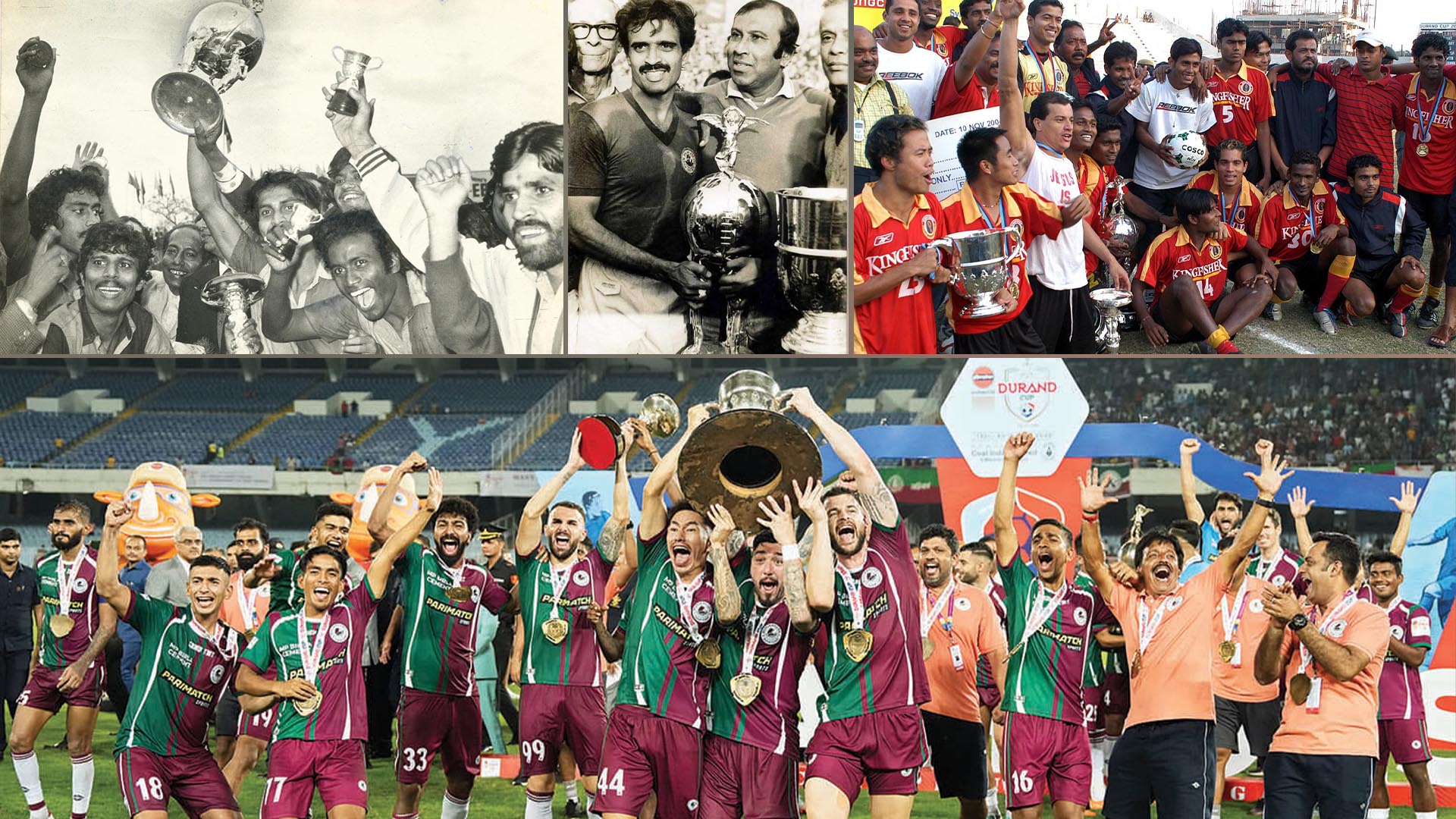
The statistical reality paints a picture of a rivalry that is agonizingly tight, a perpetual tug-of-war where neither side refuses to yield an inch of ground. In the rich, exhaustive history of their encounters in this specific competition, East Bengal and Mohun Bagan have crossed swords 23 times. The Red and Gold brigade holds a slight, cherished advantage in these head-to-head brawls, boasting 10 victories to Mohun Bagan’s 8, with 5 matches ending in stalemate.
Yet, when it comes to the ultimate prize, the Mariners hold the narrowest of edges. That 2023 final broke a historic deadlock. It pushed Mohun Bagan to a record 17 Durand Cup titles, leaving East Bengal agonizingly close on 16. It is a testament to how fiercely contested this honour is, a relentless, century-long race to be the undisputed king of Indian football’s oldest prize.
Long before the modern glitz, tactical cameras, and pristine pitches of the Indian Super League (ISL), the Durand Cup was the ultimate proving ground, and its primary theatre was often the packed, unforgiving stands of the Ambedkar Stadium in New Delhi. It was here, far from the familiar comforts of the Maidan, that legends were forged in the sweltering heat of the capital.
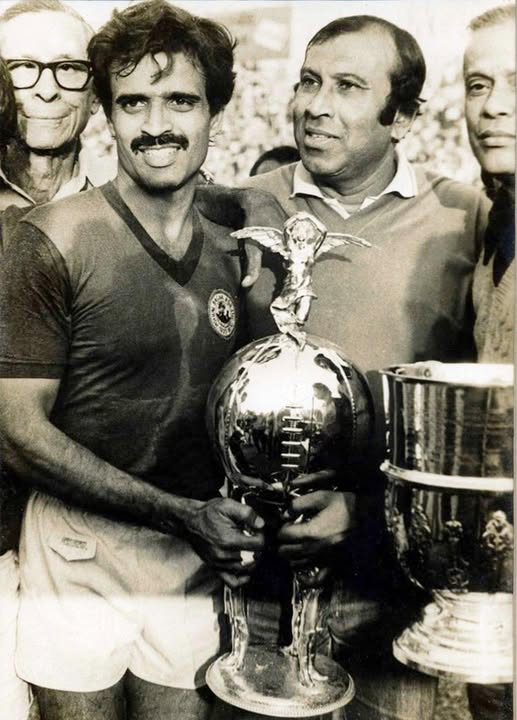
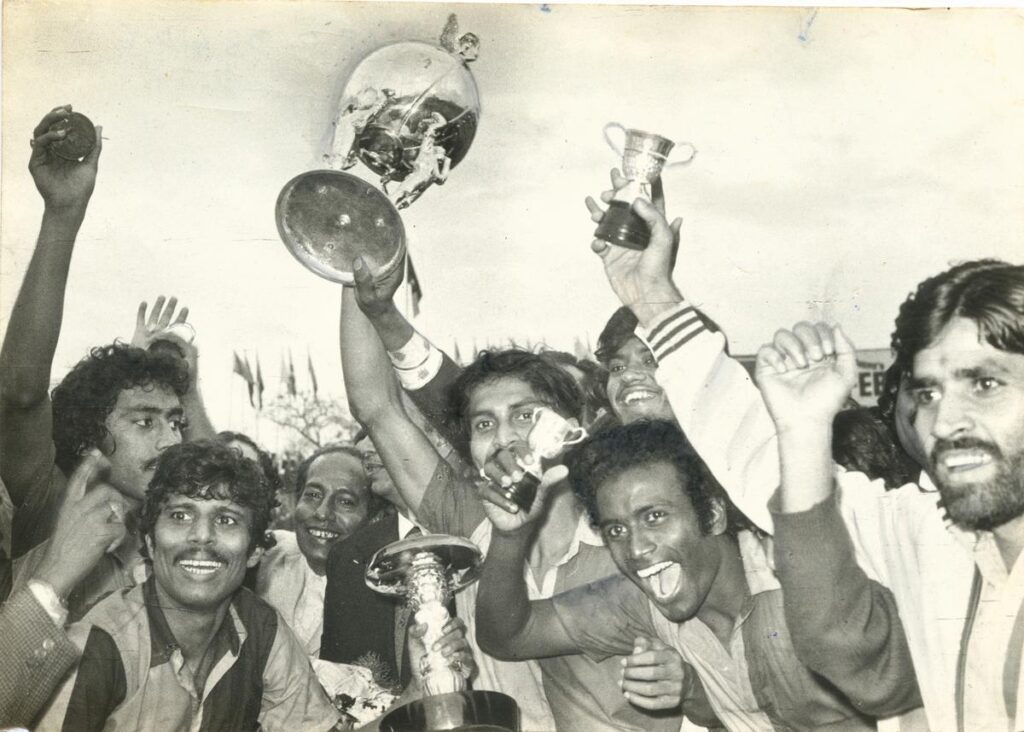
Take the 1978 final, for instance. East Bengal arrived in Delhi looking to claim their eighth title, facing a Mohun Bagan side that had humiliated them by knocking them out in the semi-finals four years prior. The pressure was suffocating, the expectations immense, but East Bengal produced a masterclass in attacking, fluid football. Surajit Sengupta became the hero that day, tearing down the flanks with a blend of poetic grace and absolute ferocity. He opened the scoring in the 15th minute, unpicking the Mariner’s defensive lock, and then seamlessly orchestrated the second goal for Mihir Bose. When substitute Tapan Das hammered the final nail in the dying minutes, securing a comprehensive 3-0 demolition, the Red and Gold half of the stadium was in pure delirium. It was a victory of pure, unadulterated dominance by Arun Ghosh’s men.
For a young Bandyopadhyay, watching the devastation unfold on a flickering black-and-white television set miles away in Kolkata, it was a formative lesson in derby trauma. “I was just a kid watching that ’78 final,” he recalls, the sting of the memory still palpable. “Seeing East Bengal dismantle us 3-0 on that screen, it felt like the sky had fallen. It’s a childhood heartbreak that teaches you the true, crushing weight of this rivalry. You realize early on that losing a Durand final to them isn’t just a defeat; it feels like a personal tragedy.”
But the true beauty of this derby lies in its relentless demand for resilience. Fast forward to the 1984 final. Mohun Bagan was in a perceived state of crisis. They had reached their third straight final but were severely depleted. Against a heavily favoured East Bengal side, the writing seemed to be on the wall. But under the legendary, iron-willed stewardship of coach P.K. Banerjee, the Mariners dug trenches. They fought for every blade of grass, turning the match into a gruelling battle of attrition. Against all odds, it was the blistering pace of Bidesh Bose that caught East Bengal off guard, scoring the solitary winner.
This historic 1-0 triumph did more than just add silverware to the cabinet; it forever etched the tactical genius of P.K. Banerjee into the folklore of the Kolkata Derby. For the thousands of Mohun Bagan fans packed into the stadium, the match became the ultimate blueprint for winning against the odds, proving that passion and rigid defensive organization could dismantle any star-studded opposition. Decades later, this gritty performance remains a shining testament to the fact that in a derby, the size of the dog in the fight matters far less than the size of the fight in the dog.
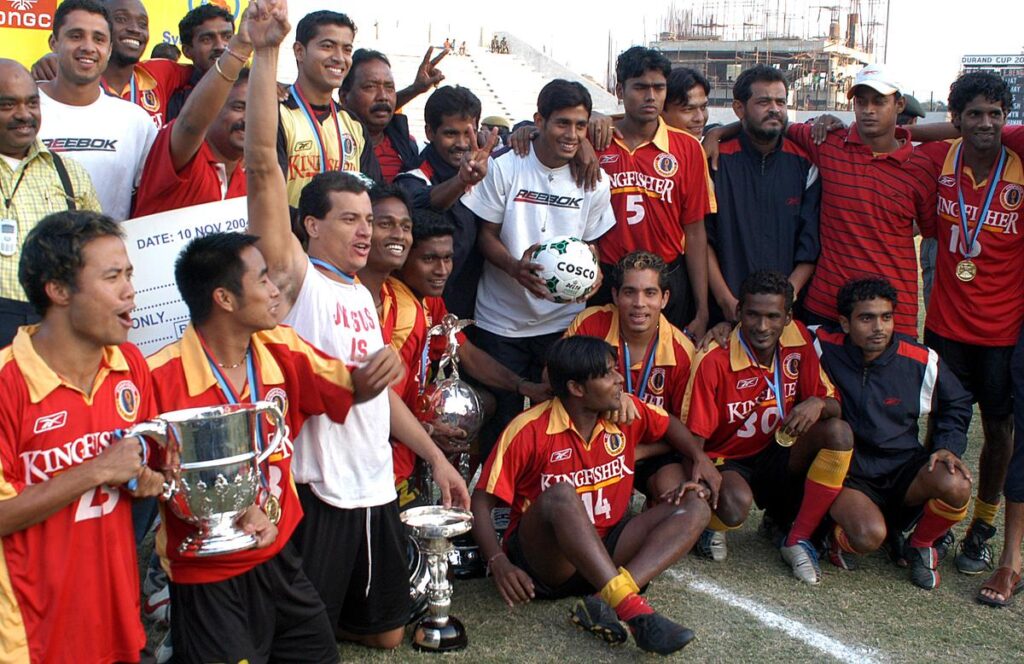
A decade later, the narrative flipped once again in a testament to the rivalry’s cyclical nature. The 1994 final saw East Bengal enter as heavy favourites. They were a juggernaut, having comfortably won all three of the Durand Cup finals they had competed in over the previous five years. But the Mariners, driven by the lingering, bitter pain of a penalty shootout defeat to East Bengal in the 1989 final, arrived with a monumental score to settle. In a match defined by shattered nerves and heavy challenges, Mohun Bagan stunned the footballing establishment. They grinded out a 1-0 victory, when Jo Paul Ancheri scored in the 87th minute of the match, exacting their cold revenge and claiming their 15th title in the process. It was a stark reminder that in the Kolkata Derby, past form is a myth, and pre-match predictions are a fool’s errand.
Perhaps no modern encounter encapsulates the chaotic, unpredictable soul of this fixture quite like the 2004 final. Once again in New Delhi, the two giants clashed with history beckoning. East Bengal, reeling from a heartbreaking shootout loss to Salgaocar the previous year, were desperate for redemption. But disaster struck in the second half when Subhash Bhowmick’s formidable side was reduced to 10 men. The ghost of impending defeat loomed large over the dugout.
But cometh the hour, cometh the man. Captain Chandan Das etched his name permanently into the annals of derby folklore. Displaying nerves of absolute steel, Das found the back of the net in both halves, becoming only the second player, matching the legendary Mohammed Habib, to score twice in a Durand Cup final against Mohun Bagan. Despite the agonizing numerical disadvantage and relentless pressure from the Green and Maroon forwards, East Bengal held on for a historic 2-1 victory. That day, they drew level with Mohun Bagan on 16 titles, a balancing of the scales achieved through pure grit.
These are not just games of ninety minutes; they are chapters in a sprawling, epic saga. From the sun-baked turf of Ambedkar Stadium to the roaring, rain-slicked cauldron of the Salt Lake Stadium, the Durand Cup has been the canvas for this beautiful, brutal rivalry. It is a stage that demands absolutely everything. It demands the tactical genius of the coaches, the unyielding stamina of the defenders who throw their bodies on the line, and the cold-blooded, clinical precision of the strikers.
But most of all, the Durand Cup Derby demands heroes. It demands players who can carry the crushing hopes of millions on their shoulders and not break under the weight. Whether it is Surajit Sengupta dancing past tackles in ’78, Bidesh Bose outrunning the odds in ’84, Chandan Das defying mathematics with ten men in ’04, or Dimitri Petratos unleashing a lightning bolt into the Kolkata night in ’23, the derby always, inevitably, finds its protagonist.
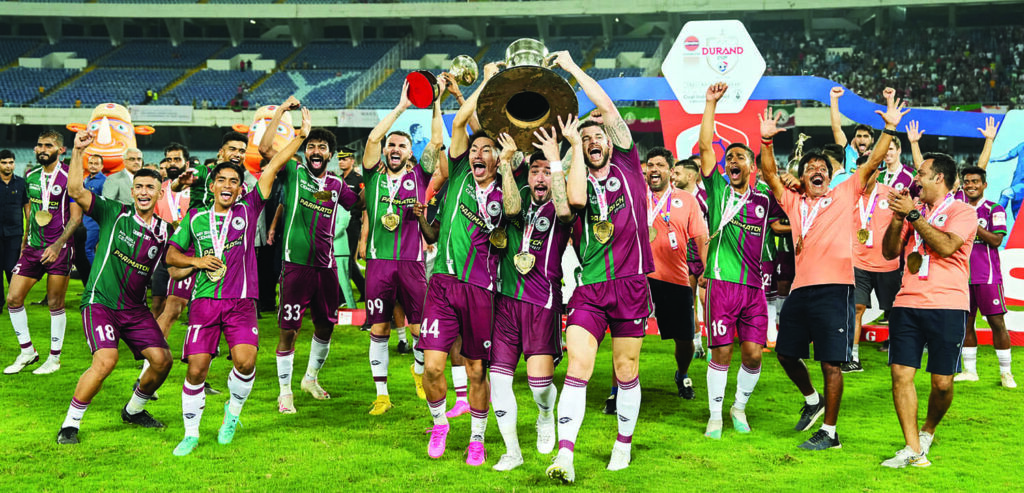
As we look ahead to the next chapter of this century-old conflict, the numbers will be fiercely debated in tea stalls and corporate boardrooms alike: 23 meetings, 10 for the Red and Gold, 8 for the Green and Maroon. 17 titles against 16. But on the pitch, the moment the referee’s whistle pierces the humid air, the statistics will melt away. All that will remain is the ball, the badge over the heart, the enduring memories of triumphs and heartbreaks shared by fans and journalists like Argha Bandyopadhyay, and the burning, desperate desire to conquer the enemy. The Durand Cup awaits its next hero, ready to be immortalized in the unending, emotional potboiler that is the Kolkata Derby.