The long way home: Halicharan Narzary’s return to Bodoland
East Bengal win record-equalling 17th Durand Cup with thumping victory over Mohun Bagan
Midul Doley and the making of a Durand Cup story nobody saw coming
Eleven men & A Village fairy tale: Chesterpoul Lyngdoh and the rise of Nongkseh on the Durand Cup stage
The fear was gone – That was the moment Birendra Thapa knew Shillong Lajong had changed
Mohun Bagan prevail on penalties over defending champions NorthEast United to set up Kolkata Derby final
Lalrinliana Hnamte slipped into the Durand Cup quietly – Then made sure everyone noticed
East Bengal FC edge SC Delhi on penalties to reach 135th IndianOil Durand Cup final
A Stage to Shine: Emerging Talents finds their moment at the 135th IndianOil Durand Cup
A mother’s stick, A Captain’s armband: Kenstar Kharshong’s Durand Cup Odyssey
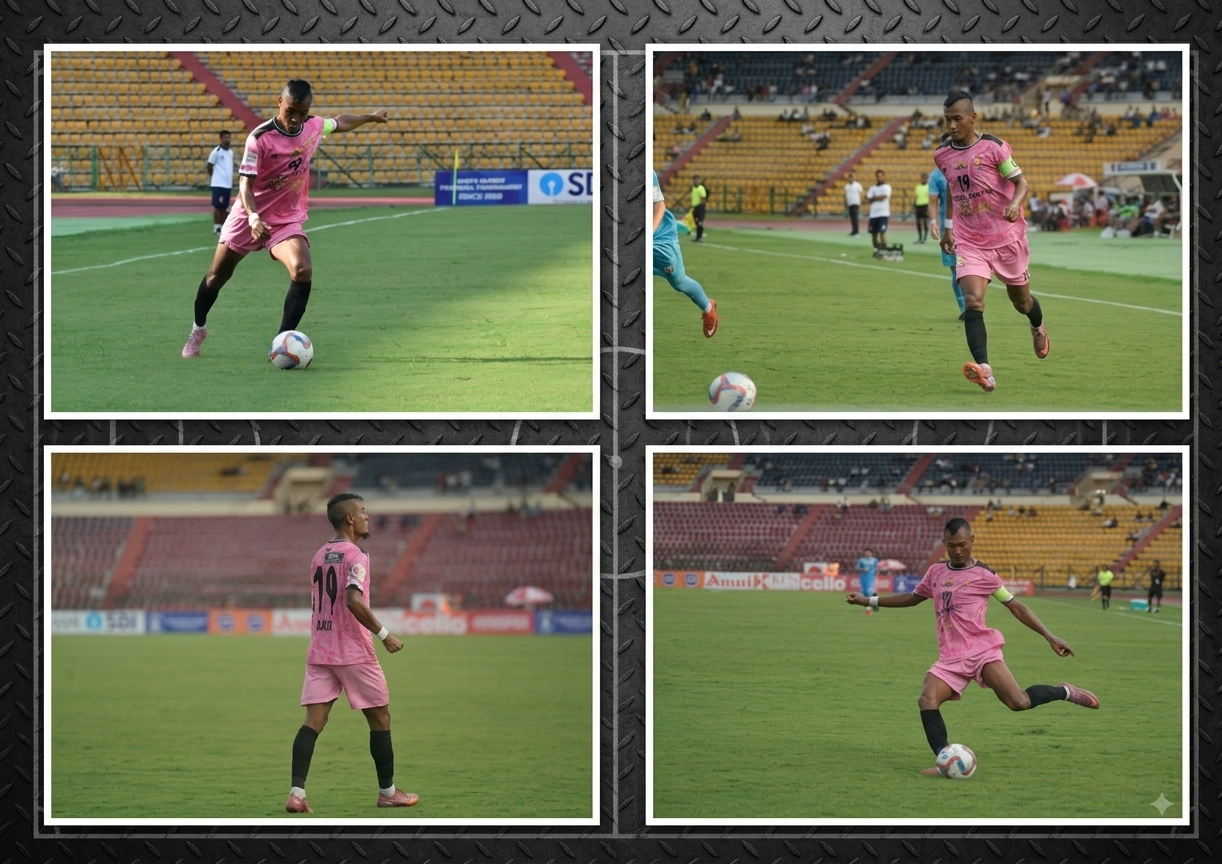
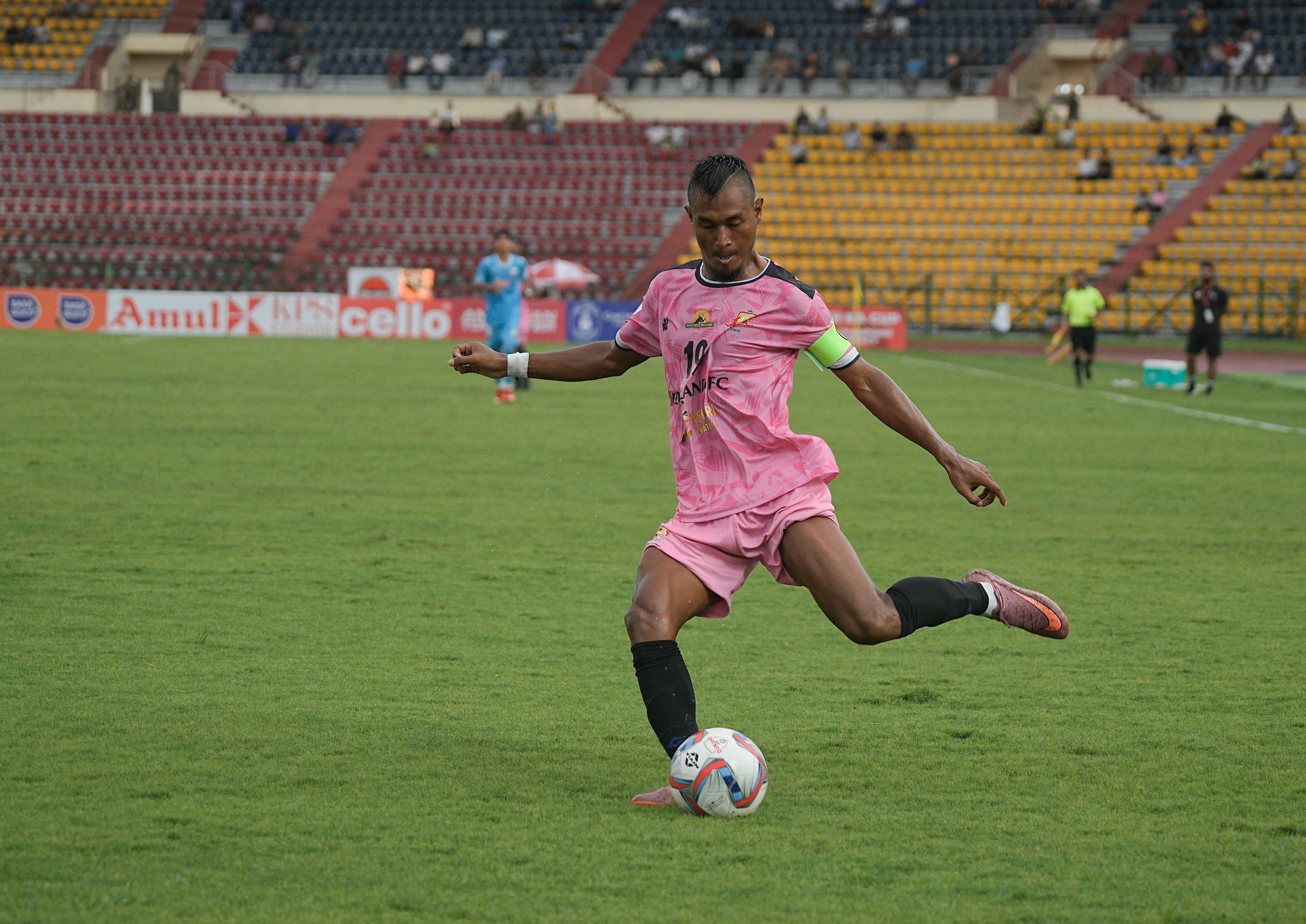
The long way home: Halicharan Narzary’s return to Bodoland
Indian football has a well-worn migratory pattern. Talent is found in places most fans couldn’t locate on a map — a village in Assam, a hillside in Manipur, a paddy field in Mizoram — and sent, almost by conveyor belt, toward the academies and floodlit stadiums of the metros. It is a route that runs, almost without exception, in one direction.
Halicharan Narzary’s story, for this Durand Cup, runs the other way.
He was born into a Bodo family in the Bodoland Territorial Region of Assam — a homeland with its own language, its own rhythms, its own idea of what an evening should sound like — and for close to two decades, he has carried that identity through dressing rooms that had little use for it. Mumbai. Kochi. Guwahati. Hyderabad. Bengaluru. Cities that wanted his legs, and were rarely curious about where they had learned to run.
This time, the shirt has his region’s name on it.
There is a version of this story that begins in a stadium — under lights, with a crowd, with a badge that means something.
But Halicharan Narzary’s version begins at home, on an ordinary evening, with nothing more dramatic happening than a man keeping himself sharp for a season that hadn’t started yet.
“I was at home,” he says. “I was practising at home.” That was where he was when the phone rang.
The Call
It was Dr. Sangrang Brahma, the owner of Bodoland FC and General Secretary of the Assam Football Association, on the other end. He asked Narzary to come and help his team.
Narzary did not say yes. Not straight away.
“I asked him to give me some time,” he says now, “because I hadn’t been able to decide yet.”
It is a small admission, but a telling one. For a player who has spent almost his entire career being wanted by other people’s clubs, chosen for what he could do for someone else’s project, this was, for once, a decision he got to make for himself.
He thought about it. And somewhere in that thinking, something settled.
“I decided that Bodoland FC is my team,” he says. “It’s my Bodoland FC.”
When Dr. Brahma called again, for what Narzary describes as the last call, there was no more hesitation left in him. “I’m ready for the Durand Cup,” he told him. “I’m ready to play with you.”
A Career Built on Being Useful
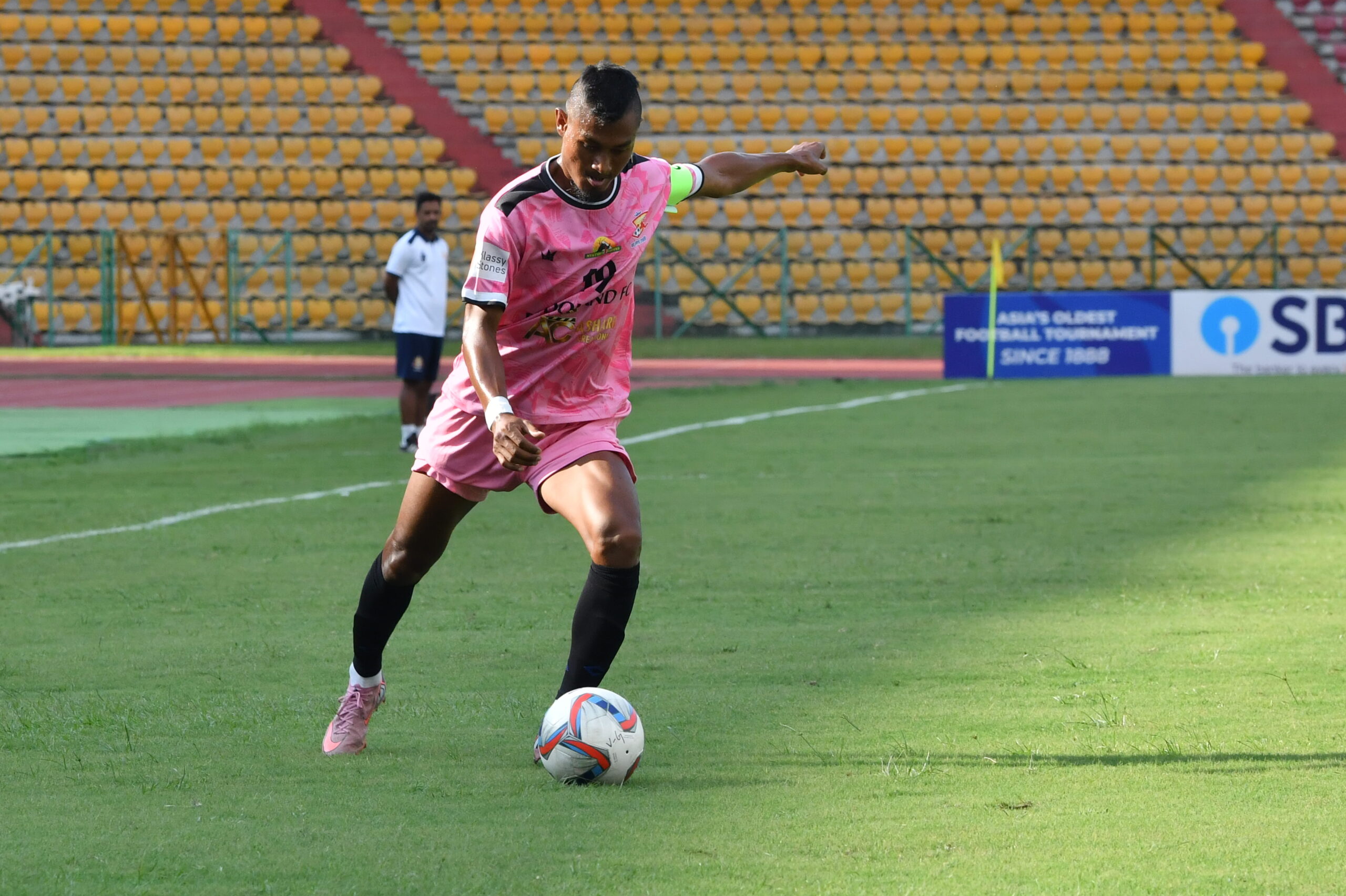
To understand why that sentence carries the weight it does, one has to understand the shape of Narzary’s career until now — a career defined less by loyalty to any one badge than by sheer, restless survival in Indian football’s toughest league.
Since emerging through the Indian Arrows pipeline, he has worn the colours of Dempo, DSK Shivajians, Chennaiyin, NorthEast United, Kerala Blasters, Hyderabad, and Bengaluru — a winger’s odyssey across almost every dressing room the Indian Super League has to offer. It began, fittingly, right at the source: he made his ISL debut for FC Goa in the league’s very first season, back in 2014.
He has represented India at senior level, part of the side that won the SAFF Championship in 2015 and the Intercontinental Cup in 2018.
Last season, at Diamond Harbour, he was part of a side that made history of its own: the club won the Indian Football League title in 2025–26, their first major trophy, earning promotion to the Indian Super League.
Narzary, in his thirties by now, was still doing what he has always done — lending his experience to somebody else’s rise.
It is a career built on being useful to other people’s ambitions. Bodoland FC is the first line in it that belongs to him.
A Ground With No Name
Narzary did not grow up dreaming of the Indian Super League. By his own account, he barely grew up around football at all.
“I used to work with my mother and grandfather at home,” he says of his early childhood in the Bodoland Territorial Region. “I didn’t know much about football.”
At home, the language was Bodo, the tongue of the community he was born into, long before it was ever the clipped, mixed shorthand of an ISL dressing room.
What he did have was a senior club in his village that played every evening — grown men, kicking a ball around after the day’s work was done, in the unhurried, unceremonious way villages across Assam do.
He would go for an evening walk and find himself watching them. Then following the ball with his eyes. Then, without quite deciding to, chasing it himself.
“I started following the ball,” he says. “Then I started passing the ball. Then I started playing football.”
There was a small ground near his home — nothing more than that, no name worth remembering — and it was there, from the age of ten or eleven, that whatever this has become first took shape.
“I understood that football is a game of enjoyment,” he says. It is a simple sentence, and yet, given time, it starts to sound like the one piece of footballing philosophy that every contract, every transfer, every relegation dogfight since has failed to talk him out of.
One Penalty
Ask him for the moment his career turns on, and he does not reach for a highlight reel. He reaches for one kick.
Hyderabad FC, the 2022 ISL final, a season that had strung him along through injury before it let him finish it. “I was injured for two or three months,” he says. “It was a big moment for me.”
When it came down to penalties against Kerala Blasters at a packed Fatorda Stadium, Narzary stepped up and buried his penalty, sending the goalkeeper the wrong way to help confirm Hyderabad’s first-ever ISL title.
“I scored a penalty and became champion,” he says. “I never forget that moment. I always remember that penalty.”
It is the closest thing to swagger he allows himself in conversation — and even then, it arrives wrapped in gratitude rather than boast, the memory of a man who had to wait out an injury to earn it.
Not for the Trophy Cabinet
There is no single figure in his village who set him on this path, no mentor he singles out, no dramatic origin story waiting to be mythologised.
When asked who is proudest of him now, Narzary’s answer is quieter, and in its way, more honest: his mother, his younger brother, his sister, his wife.
People who did not always know much about football — his mother still doesn’t, he says plainly — but who have watched him carry the name of their home onto a field that matters.
“I feel very proud because I am from Bodoland,” he says. “I like my place very much.
It is worth sitting with how different that pride sounds from the pride of trophies. He has lifted a national title before. He has worn the India shirt at the Asian Cup.
But this — pulling on a jersey with his own region’s name and his own community’s identity stitched across it, in front of people who have watched Bodoland fight for a place on football’s national stage — appears to sit somewhere else in him entirely, somewhere the medals don’t quite reach.
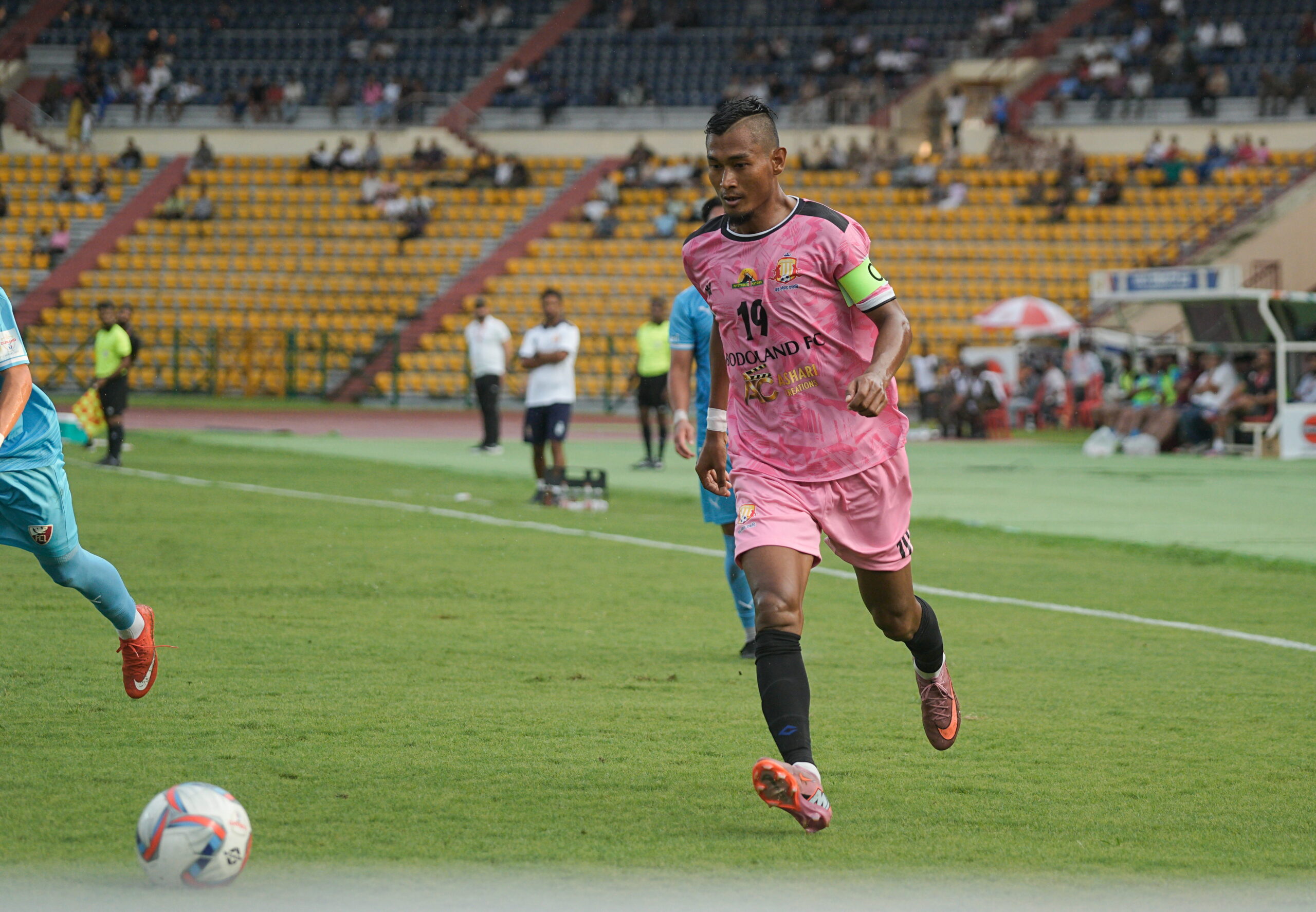
“I really wanted to play for Bodoland FC,” he says. “I saw the support of the fans. I felt very proud.”
For a club that only came into being in 2022, and only reached the Durand Cup for the first time the year after that, having a player of Narzary’s experience choose them — not for money, not for a step up, but seemingly for the shirt itself — says something about how far Bodoland FC’s ambitions have already travelled.
It says just as much about how much it can mean to a community to see one of its own carry its name onto a national stage.
Four Goals, and a Statement
Bodoland FC’s Durand Cup campaign came to an end in the group stages, in their final group-stage fixture against Karbi Anglong Morning Star FC — and it ended the way very few campaigns do, with the result mattering less than the performance.
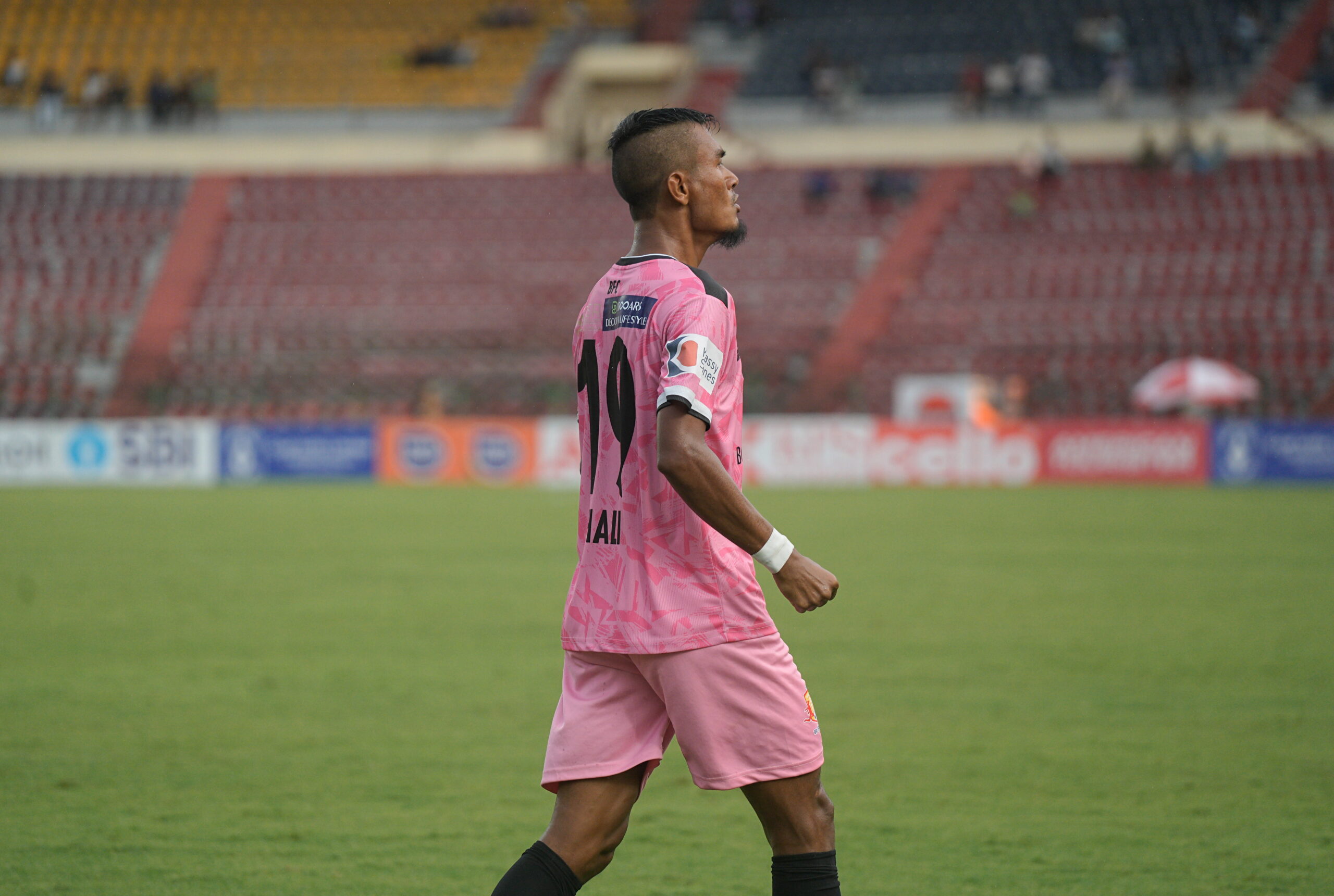
Bodoland won 6-0. Narzary scored four of them.
It wasn’t enough to carry the side into the knockout rounds; the maths of the group had already been written elsewhere. But football has a way of remembering afternoons like this regardless of what the table says. A 32-year-old who didn’t have to say yes to this tournament, who chose it anyway, closed out his side’s campaign with the kind of display that explains, in the simplest possible terms, exactly why he was asked in the first place.
This is Bodoland FC’s fourth appearance in the Durand Cup since their debut in 2023 — a run that included a quarter-final finish only last year — and this year’s campaign will likely be remembered less for the scoreline that ended it than for the afternoon one of its own players made sure nobody forgot why he had been brought in.
What He’d Tell the Next One
He does not offer young players complicated advice, and perhaps that is fitting for a man whose own footballing education was so unadorned.
“Stay away from bad things, do good things,” he says. “Go to the ground and give your best. Nothing is possible without hard work.”
It would be easy to file that away as the kind of thing every veteran says to every camera.
But heard against everything that came before it — the boy who didn’t know football, the evenings spent simply watching, the years of moving from club to club without ever quite arriving anywhere that felt like his — it reads less like a platitude and more like an instruction he has actually followed, all the way from a small, nameless ground in Bodoland to a stage big enough, finally, to bring him home.
Indian football is still, in many ways, a sport that is more comfortable exporting talent than welcoming it back. Its brightest careers tend to move only one way — outward, from small towns and quiet regions toward the bigger leagues and bigger names, rarely circling back to where they began.
For one Durand Cup, in one Bodoland FC shirt, Halicharan Narzary has quietly reversed that current. He signed off the way few campaigns end and most players only dream of — four goals in his final outing, a scoreline the record books will remember even if the group table does not — and somewhere underneath the transfer fees and the television deals, that is the reminder worth holding onto: this is still a game that people play for the places, and the people, they come from.
