Eleven men & A Village fairy tale: Chesterpoul Lyngdoh and the rise of Nongkseh on the Durand Cup stage
East Bengal win record-equalling 17th Durand Cup with thumping victory over Mohun Bagan
Midul Doley and the making of a Durand Cup story nobody saw coming
Eleven men & A Village fairy tale: Chesterpoul Lyngdoh and the rise of Nongkseh on the Durand Cup stage
The fear was gone – That was the moment Birendra Thapa knew Shillong Lajong had changed
Mohun Bagan prevail on penalties over defending champions NorthEast United to set up Kolkata Derby final
Lalrinliana Hnamte slipped into the Durand Cup quietly – Then made sure everyone noticed
East Bengal FC edge SC Delhi on penalties to reach 135th IndianOil Durand Cup final
A Stage to Shine: Emerging Talents finds their moment at the 135th IndianOil Durand Cup
A mother’s stick, A Captain’s armband: Kenstar Kharshong’s Durand Cup Odyssey
The long way home: Halicharan Narzary’s return to Bodoland
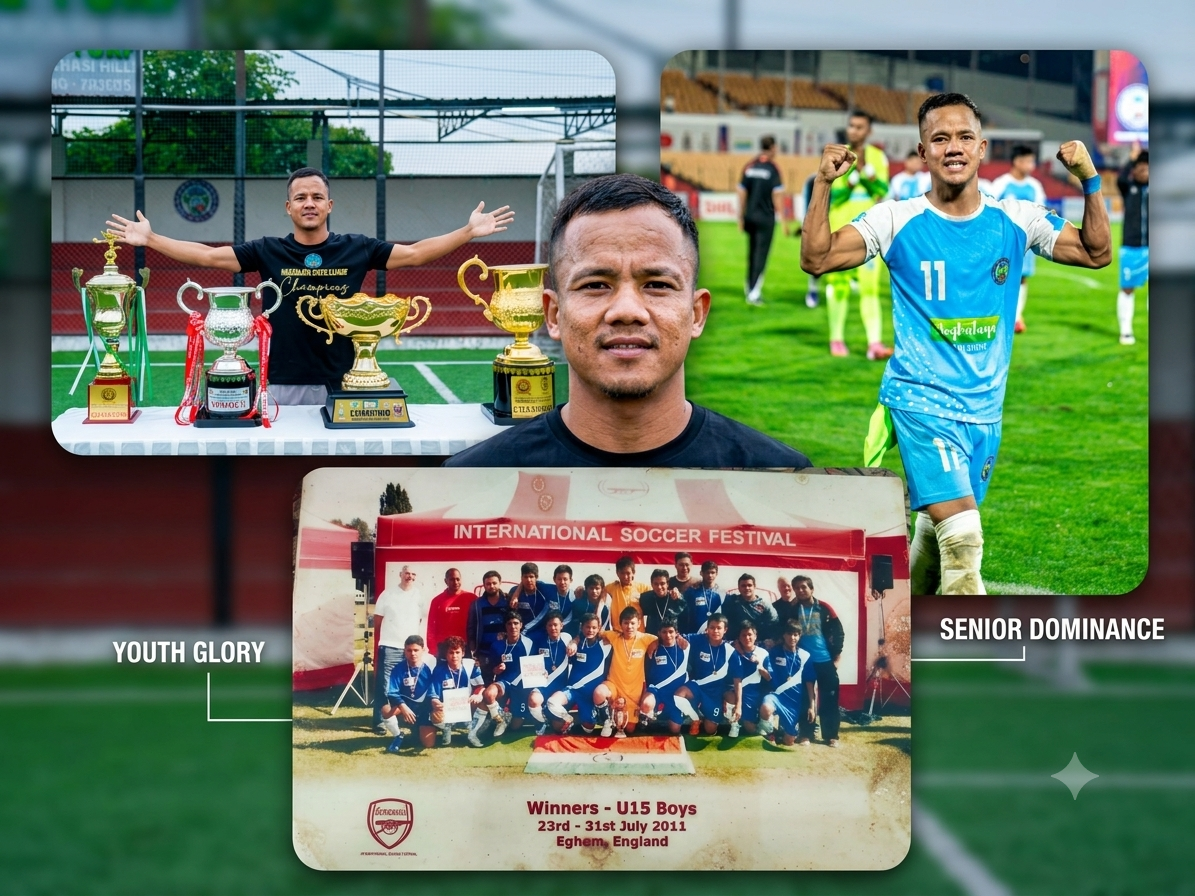
From shouldering the weight of his family as a grieving teenager to leading a historic local club against India’s heavyweights, the Meghalaya winger embodies the ultimate underdog spirit of Asia’s oldest tournament

When Nongkseh SS&CC takes the pitch, an entire village in Upper Shillong effectively shuts its doors. Shops are locked, daily chores are suspended, and entire families—from restless toddlers to elderly grandmothers—make the pilgrimage to the stadium. They do not just come to watch a football match; they come to witness their own community’s pulse manifesting on the green grass.
Just a couple of years ago, Nongkseh was a forgotten third-division team in the local Shillong ecosystem. Today, they are the authors of Indian football’s most romantic modern fairy tale. Having blitzed through the divisions—capturing the Shillong First Division, the Champion Cup, and the Meghalaya State League on the back of an astonishing 30-plus match unbeaten streak—they forced the doors open to the grandest stage of them all: the Durand Cup.
At the heart of this miraculous ascent is their diminutive, battle-hardened talisman, Chesterpoul Lyngdoh.
Barely standing five-foot-one, Chesterpoul has spent his entire career silencing critics who judged him by his physical stature. Now, in the twilight of his prime, the seasoned journeyman has returned home to anchor his community club on national television.
For Chesterpoul, the Durand Cup is not just a prestigious tournament; it is a profound testament to survival, community love, and the unyielding spirit of grassroots football.
A Promise Made in Grief
To understand Chesterpoul’s relentless engine on the pitch, one must look back to 2009. That year, he lost his father, leaving his mother as the sole provider for him, his five brothers, and two sisters. Football instantly ceased to be a mere childhood passion; it became a strict matter of family survival.
“I started my professional career to help my family,” Chesterpoul recalls, his voice carrying the quiet, enduring weight of responsibility. “My younger brothers and sisters went to school, and my mother worked alone. I had to be with them; I had to help them. Even now, I still have to look after my family. That is why I had to work hard.”
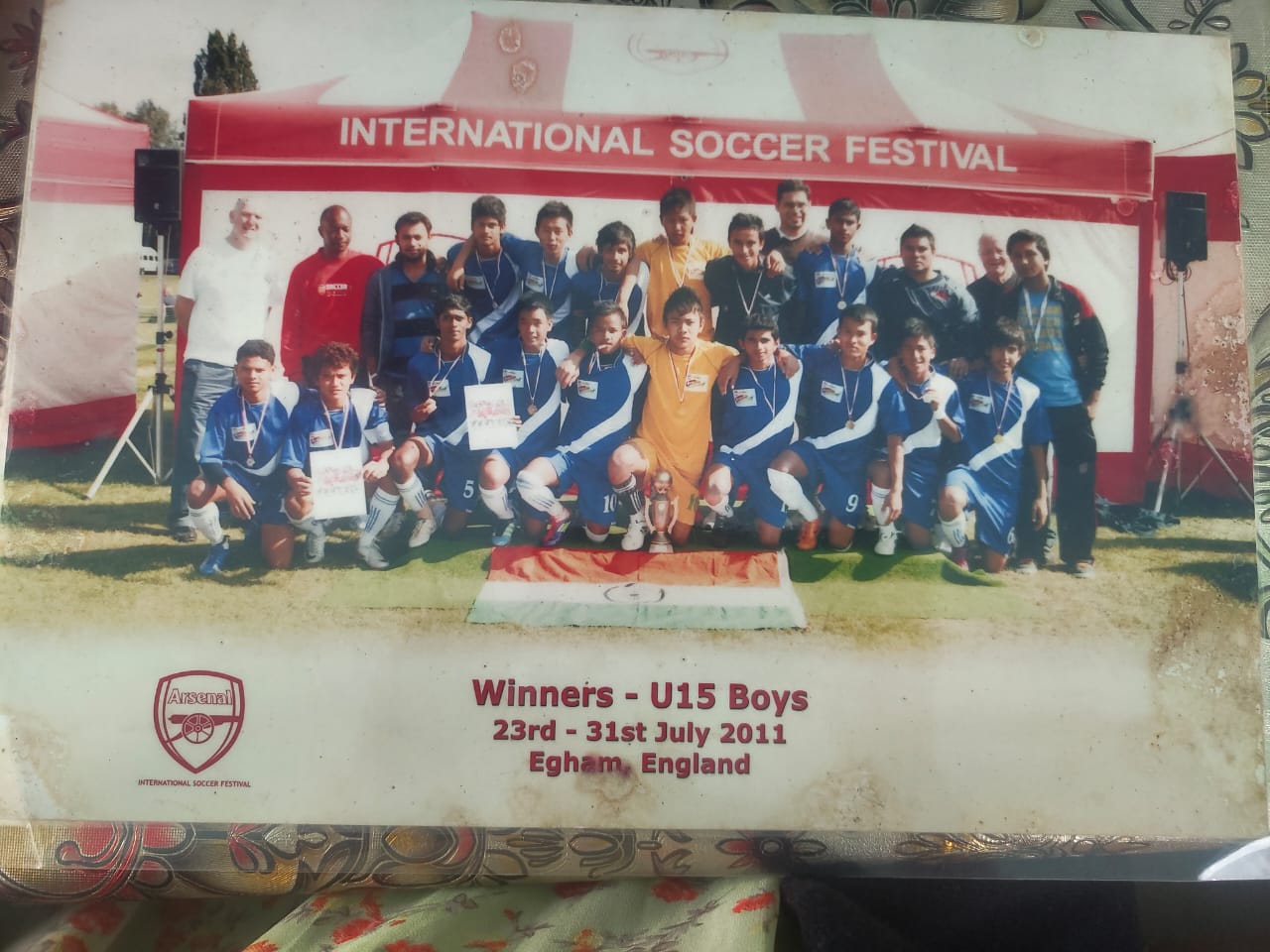
Discovered by local scout Bobby Nongbet in a village tournament, he was drafted into the Sports Authority of India (SAI) facility in Shillong. He represented Umroi School in the Subroto Cup and even won a youth tournament in England in 2011 through the famous Tata Tea Jaago Re initiative. But the true test came when he left the comforting hills of Meghalaya for the unforgiving professional circuit.
The Journeyman and the Kolkata Cauldron
Chesterpoul’s career reads like a geographical map of Indian football. He joined the Pune FC Academy in 2013, transitioned to Indian Super League (ISL) franchise FC Pune City, and made his senior professional breakthrough with Churchill Brothers in the I-League.
He knows exactly what it feels like to conquer giants. One of his most cherished memories is scoring a brilliant header, a remarkable feat for a five-foot-one winger to secure a 2-1 victory over Mohun Bagan while at Churchill Brothers. That very performance earned him a contract with the Kolkata heavyweights the following season.
It was in the pressure cooker of Kolkata that he learned the brutal emotional extremes of professional football.
“In Kolkata, the pressure is completely different,” he explains. “If you play well, you are a star. But for a young player, it is incredibly difficult. If you don’t play well, the pressure comes immediately from the fans and the management. It is a tough atmosphere for developing talent.”
He carried those hard lessons through stints with Real Kashmir—where he reached the Durand Cup semi-finals in 2019—Sudeva Delhi, Rangdajied, and FC Bengaluru United. By the time he signed for Nongkseh, he was a seasoned veteran armed with a wealth of tactical adaptability, having been molded into a versatile winger by elite coaches like Naushad Moosa.
The 7-0 Statement and the Equalizing Pitch
When Nongkseh qualified for the Durand Cup, they were immediately thrown into the deep end against heavyweights like Shillong Lajong and well-drilled sides like Langsning FC. After a 2-0 defeat to Lajong and a heartbreaking 2-2 draw against Langsning (after leading 2-0 at halftime), the village club was effectively knocked out of quarterfinal contention.
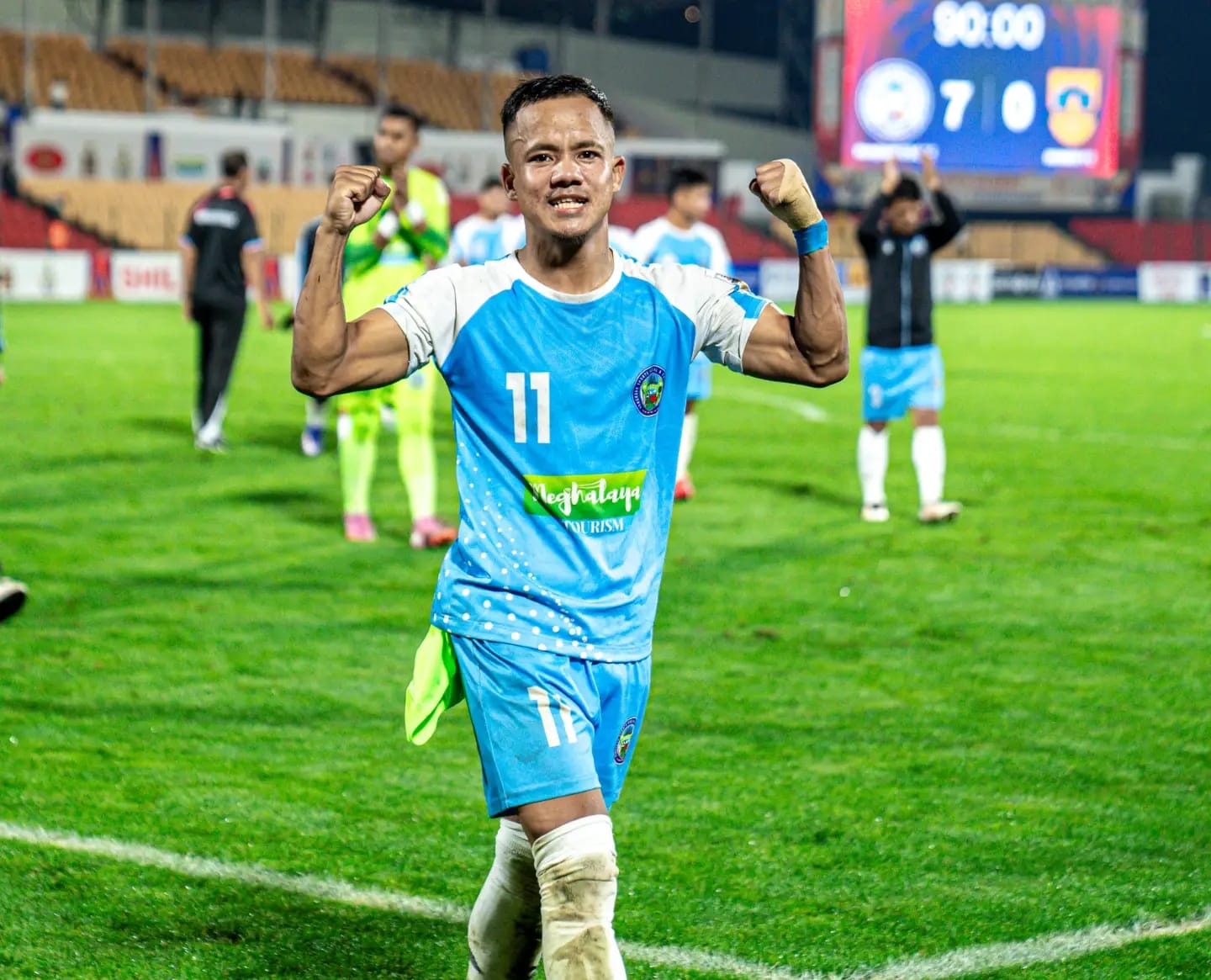
But in the Durand Cup, pride is just as valuable as progression. Facing Mumbay FC in their final group match, Nongkseh unleashed a devastating performance, winning 7-0. Chesterpoul orchestrated the attack and got on the scoresheet with a clinical finish in the 56th minute. It was a commanding, historic statement broadcast across the nation.
“The Durand Cup is a massive tournament in Asia,” Chesterpoul says, his eyes lighting up at the memory. “I just told the young boys in our dressing room: any big club we face, we have to fight. Football is 11 versus 11. We have two feet and two hands. Don’t worry about their height or their funding.”
Unlike the hostile environments he experienced earlier in his career, the support from the Nongkseh community—the local Dorbar Shnong—is deeply unconditional.
“When we lost to Lajong, they didn’t criticize us,” he says, touched by the village’s unwavering loyalty. “They sent us messages saying, ‘Don’t worry, we are with you. Keep working hard.’ Even the club owner told us not to listen to any negativity, to just believe in God and keep fighting.”
The Secular Fabric of the Dressing Room
Beyond the tactics and the goals, Chesterpoul is immensely proud of the harmony within his squad. Indian football dressing rooms are a beautiful microcosm of the nation’s diversity, and Nongkseh is no exception. Before they step onto the pitch for massive Durand Cup fixtures, the village community gathers to pray for them—and inside the locker room, mutual respect bridges all divides.
“We are Christians, but I don’t care if a teammate is Hindu, Muslim, or Buddhist—we are together,” he declares passionately. “I have stayed outside the state for years. When I pray, my teammates respect me; when they pray, I respect them. In India, we have to look out for each other and respect each other. We have to stand together.”
As more local players from Meghalaya successfully transition to professional academies across India, Chesterpoul stands as a vital mentor. He pushes the younger local boys in practice under the guidance of head coach Joseph, reminding them that raw talent means nothing without a relentless engine, urging them to avoid local distractions and aim for national excellence.
“I tell them I don’t have that much natural talent, and my height is small, but I survive because I work hard,” he says. “Believe in yourself. Don’t give up.”
Through Chesterpoul Lyngdoh, the Durand Cup fulfills its greatest historical purpose. It is the ultimate stage where a grieving boy who played to feed his family can evolve into a seasoned professional, ultimately returning home to lead his village onto national television. Nongkseh SS&CC may not have lifted the trophy this year, but in the hearts of Upper Shillong, they are already champions.
