A mother’s stick, A Captain’s armband: Kenstar Kharshong’s Durand Cup Odyssey
East Bengal win record-equalling 17th Durand Cup with thumping victory over Mohun Bagan
Midul Doley and the making of a Durand Cup story nobody saw coming
Eleven men & A Village fairy tale: Chesterpoul Lyngdoh and the rise of Nongkseh on the Durand Cup stage
The fear was gone – That was the moment Birendra Thapa knew Shillong Lajong had changed
Mohun Bagan prevail on penalties over defending champions NorthEast United to set up Kolkata Derby final
Lalrinliana Hnamte slipped into the Durand Cup quietly – Then made sure everyone noticed
East Bengal FC edge SC Delhi on penalties to reach 135th IndianOil Durand Cup final
A Stage to Shine: Emerging Talents finds their moment at the 135th IndianOil Durand Cup
A mother’s stick, A Captain’s armband: Kenstar Kharshong’s Durand Cup Odyssey
The long way home: Halicharan Narzary’s return to Bodoland
From retrieving balls on village mud-pitches to anchoring Shillong Lajong against ISL giants, how a local boy became the defensive heartbeat of Meghalaya on Asia’s oldest stage.
When he was just eleven years old, Kenstar Kharshong returned to his village, situated a rugged hour’s drive from the heart of Shillong, nursing a severely injured arm. He had sneaked out, yet again, to play on the unforgiving local mud-pitches. But in the Kharshong household, football was not viewed as a viable future; it was a dangerous distraction.
“My arm was misplaced, and I was in terrible pain,” Kenstar recalls, a wry, retrospective smile evident even through the phone line. “I went home, and instead of taking care of me, my mom hit me with a stick. She didn’t want me to play. I was crying, apologizing, saying I wouldn’t do it again. But tomorrow? The same thing would repeat.”
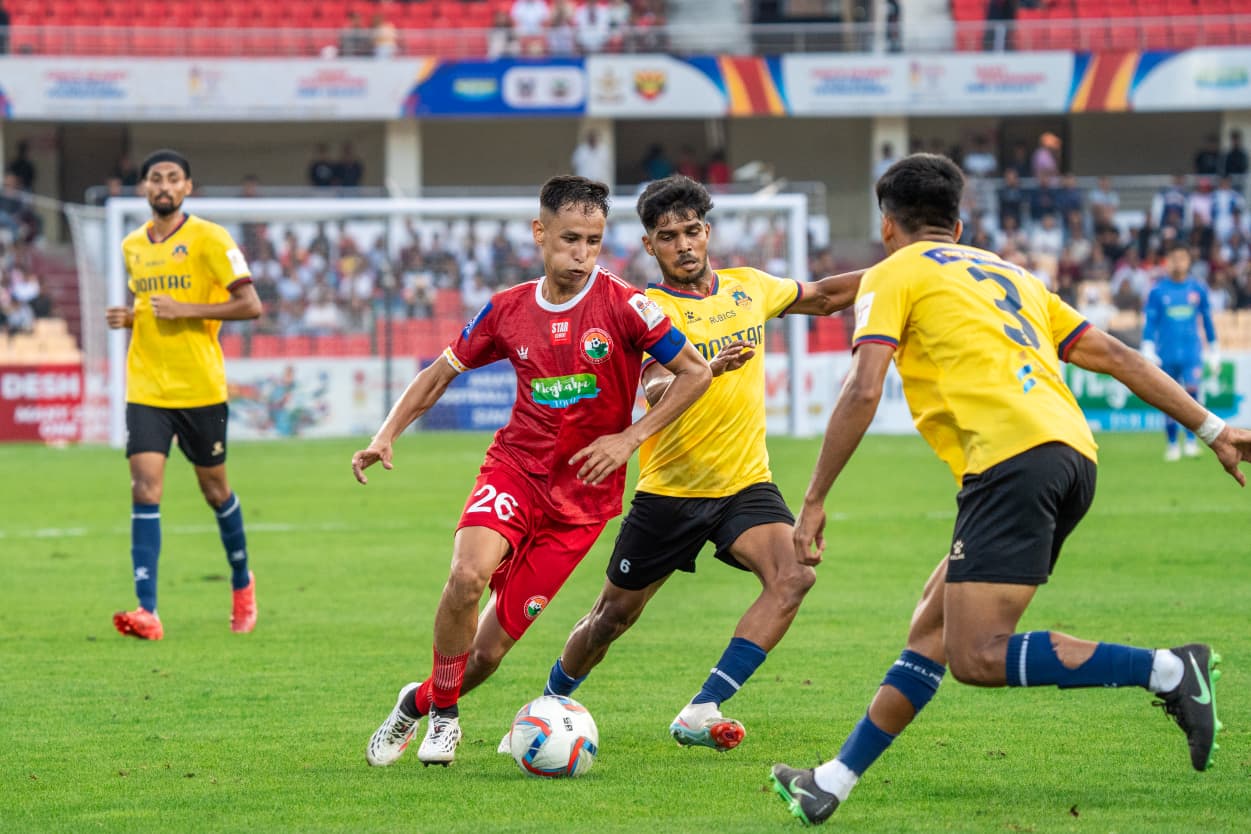
Today, that same defiant boy wears the captain’s armband for Shillong Lajong FC. And when he steps onto the pitch for the Durand Cup, the roars that greet him do not come from a frustrated mother, but from tens of thousands of delirious, red-clad fans packed into the stadium in Shillong.
For Kenstar, the Durand Cup is far more than Asia’s oldest football tournament. It is the ultimate crucible where local Northeastern boys often overlooked or under-resourced get to stand toe-to-toe with the heavily funded, foreign giants of the Indian Super League (ISL). It is a stage where resilience is currency, and Kenstar is arguably its wealthiest local patron.
The Village Ball-Boy to Academy Prospect
Shillong Lajong has long been romanticized as the undisputed factory of raw Northeastern talent. But Kenstar’s path to the fabled academy was rooted in quiet, distant observation.
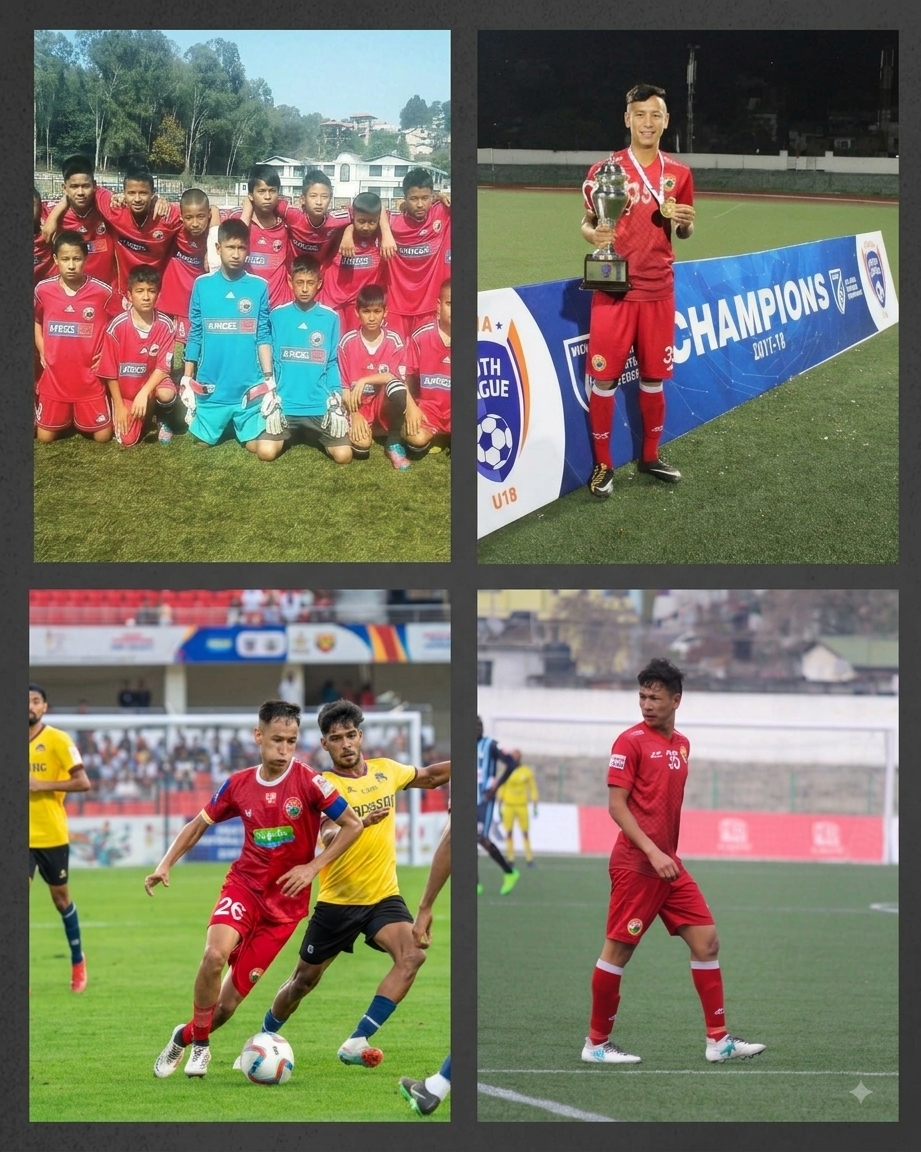
Growing up, his village had two older boys who played for Lajong’s lower-age groups. To young Kenstar, they were untouchable heroes. “They played so rough; even the small kids would get kicked and hit,” he remembers. “I was too young to play with them. So, I would just watch. If the ball went out for a throw-in, I would run, collect it, and give it back just to let them play. But my heart was itching. I wanted so badly to be there.”
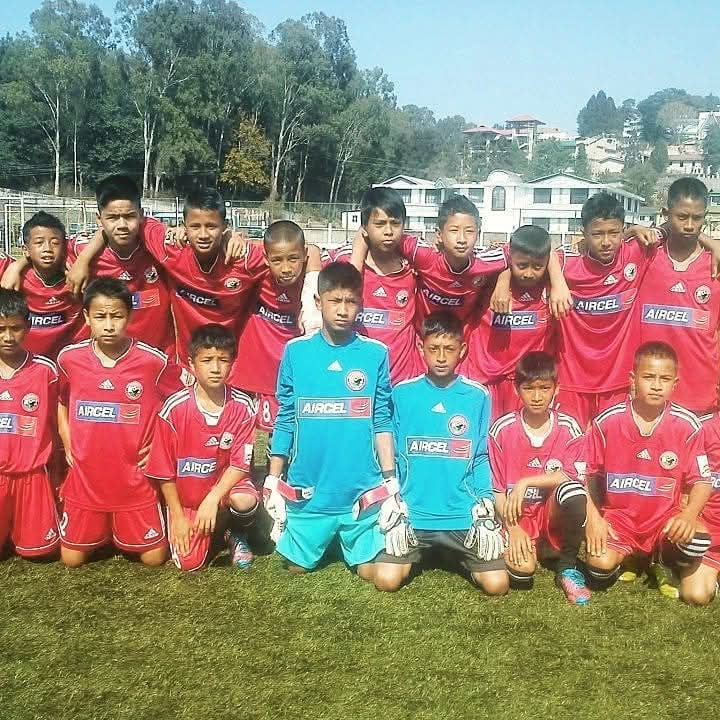
That burning hunger led him to train alone in his backyard for over a year before finally attending a Lajong trial. Selected at age 13, his daily routine became grueling: waking up at dawn for jogging and core work, attending school, and then rushing to club training.
He initially played as a holding midfielder. The pivotal shift in his career came during an away youth tournament in Kolkata under coach Alison Kharsyntiew. Faced with a sudden injury crisis at the back, the coach pulled a massive gamble and slotted the teenage Kenstar into the centre-back position.
“Everyone was in doubt,” Kenstar admits. “But after the match, the manager came up to me and said, ‘You played well. We doubted you, but you proved us wrong.’ From that day, I never looked back.”
The Wilderness and The Return
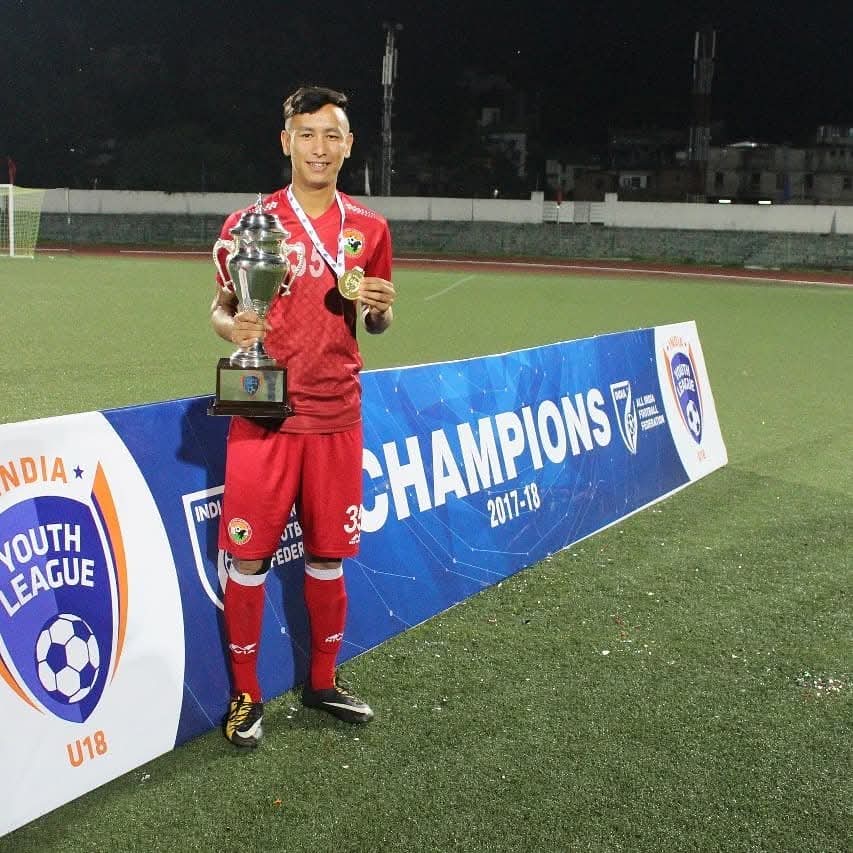
Footballing ascents are rarely linear, and Kenstar’s journey is scarred with brutal setbacks that forged his current leadership. After making his professional I-League debut in 2017, he endured the heartbreak of Lajong’s relegation in the 2018-19 season. Despite a brief, glorious patch in 2019 where the youth squad swept three local trophies—including the Shillong Premier League and Meghalaya State League—Kenstar was soon forced out of his comfort zone.
He embarked on a nomadic journey, spending time with the Kerala Blasters reserves and Mumbai’s Kenkre FC. But his toughest opponent wasn’t a striker; it was his own body. A severe injury sidelined him for an entire year—a grueling hiatus that tests the sanity of any professional athlete.
“Going outside your comfort zone is difficult,” he reflects. “Playing in the top tiers of Indian football is tough. I got injured, stayed out for a year, tried to come back, and just kept pushing. When things get tough, you have to be tougher than what is happening to you.”
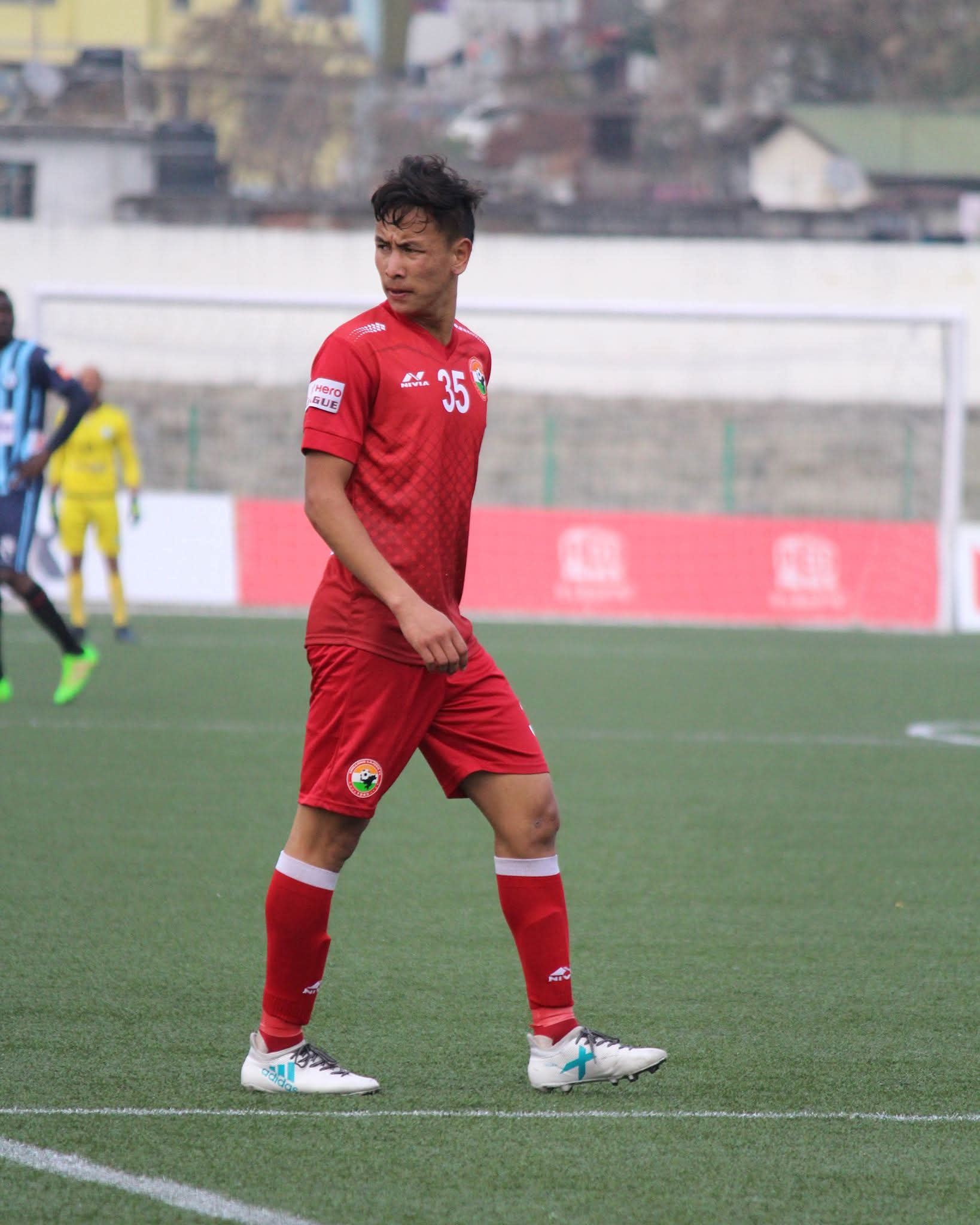
He returned to Meghalaya, grinding through the local leagues until his boyhood club finally called him back home. Handed the captaincy last season, the 27-year-old now leads with a profound, battle-hardened empathy, marshaling his troops under the tactical guidance of head coach Birendra Thapa.
When nervous academy graduates step into the senior dressing room, intimidated by the bright lights of the Durand Cup or frustrated by a recent hard-fought draw against rivals like Langsning FC, Kenstar is the first to pull them aside.
“I tell them, especially the defenders, you have to be brave. You have to be fearless,” he says. “If you go into a 50/50 challenge, just go all out. Don’t be afraid.”
Slaying Giants: The Art of the Centre-Back
In the Durand Cup, the margins for error are terrifyingly slim. Centre-backs like Kenstar are routinely tasked with neutralizing highly-paid, physically imposing foreign strikers from ISL franchises. Slaying a giant requires a deeply cerebral approach.
To survive the onslaught of elite attackers like NorthEast United’s Alaeddine Ajaraie, Kenstar draws inspiration from his idol, Thiago Silva, known for his ice-cold composure. Fascinatingly, he also studies former midfield maestro Mesut Özil, admiring how impossible it was to dispossess him—a trait that helped the naturally right-footed Kenstar become highly comfortable distributing with his left leg.
“Playing against big teams, we have to be mentally and physically prepared because one chance, and they will punish you,” he explains. “You can’t take your eyes off the striker. But half of the job is done by communicating. If the backline is in the same shape, in the same line, it’s easier. Fifty percent is talking—do this, do that—and the other fifty percent is making the tackle.”
He preaches a doctrine of pure anticipation to his younger teammates: “You have to read the game five to ten minutes before it happens. Reacting fast isn’t just physical; it’s mental.”
The 85th-Minute Roar
As Shillong continues to serve as a vibrant host city for the Durand Cup, the tournament has morphed into a deeply emotional spectacle for the region. For Kenstar, the tactical battles on the pitch are ultimately fueled by the raw, unadulterated passion in the stands.
“When we play against teams like NorthEast United, the stadium is totally full,” he says, his voice shifting with palpable pride. “Sometimes, around the 80th or 85th minute, you are fully tired. Your body is exhausted. But then they start shouting. They give us energy. We gain more stamina because we want to give them more. Without them, football here is nothing.”
From the sting of his mother’s stick to the deafening roar of his home stadium, Kenstar Kharshong’s journey is a testament to the enduring power of local dreams. He is no longer the boy collecting stray balls on a village boundary line. He is the guardian of the Lajong defense, a captain standing tall on the historic stage of the Durand Cup, proving to the rest of India that the heart of Meghalaya beats stronger than ever.
