Parrots carrying scores, a defiant Indian referee, and a united nation—How a football club defied the British Empire’s military might
East Bengal win record-equalling 17th Durand Cup with thumping victory over Mohun Bagan
Midul Doley and the making of a Durand Cup story nobody saw coming
Eleven men & A Village fairy tale: Chesterpoul Lyngdoh and the rise of Nongkseh on the Durand Cup stage
The fear was gone – That was the moment Birendra Thapa knew Shillong Lajong had changed
Mohun Bagan prevail on penalties over defending champions NorthEast United to set up Kolkata Derby final
Lalrinliana Hnamte slipped into the Durand Cup quietly – Then made sure everyone noticed
East Bengal FC edge SC Delhi on penalties to reach 135th IndianOil Durand Cup final
A Stage to Shine: Emerging Talents finds their moment at the 135th IndianOil Durand Cup
A mother’s stick, A Captain’s armband: Kenstar Kharshong’s Durand Cup Odyssey
The long way home: Halicharan Narzary’s return to Bodoland
In the crisp winter of December 1940, the skies above an anxious, restless Calcutta carried a secret that would soon alter the landscape of Indian sporting history. The city was a powder keg of anti-colonial sentiment, with the Indian independence movement steadily gaining unstoppable momentum. Yet, on this particular afternoon, the attention of millions was tethered to a football pitch nearly a thousand miles away in Delhi.
With no radio broadcasts, live telecasts, or instant telecommunications to bridge the vast geographical divide, the citizens waited with bated breath for a flock of birds.
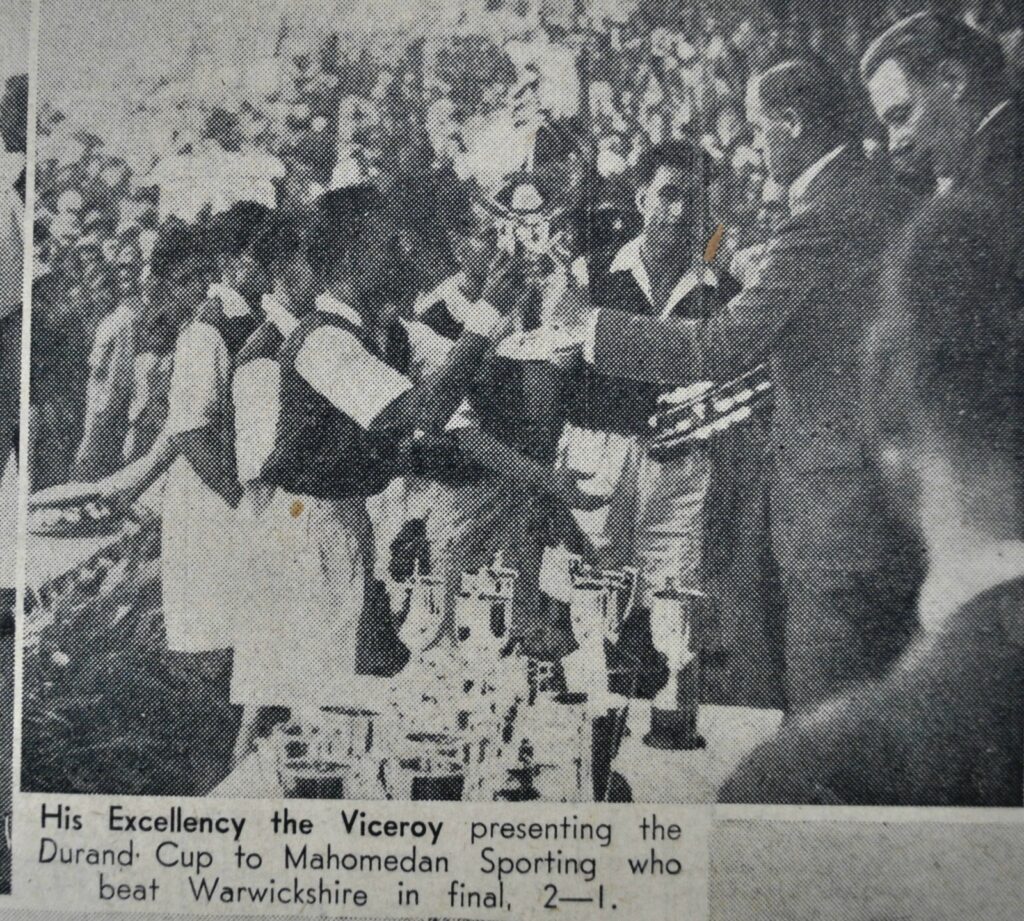
Tied carefully to the legs of homing parrots were tiny, fragile strips of paper bearing the final scoreline of the 53rd edition of the Durand Cup Final. When the birds finally descended upon the buzzing neighbourhoods of undivided Bengal, the message they brought ignited the streets into an absolute frenzy: Mohammedan Sporting had defeated the formidable Royal Warwickshire Regiment 2-1 at the Irwin Amphitheatre.
Decades after Mohun Bagan’s immortal 1911 IFA Shield triumph, the Black and White brigade had achieved the unthinkable. They had become the first Indian, and crucially, the first civilian club to win the Durand Cup, shattering the absolute, unquestioned dominance of the British military regiments in Asia’s oldest surviving football tournament that had long stood as the empire’s ultimate athletic pride.
Civilian teams had tried and failed before, most notably the East India Railways, who lost the 1927 final to the York & Lancaster Regiment. But to understand the true magnitude of Mohammedan’s 1940 victory, one must look beyond the final whistle. The journey to that monumental afternoon in Delhi was paved with institutional prejudice, a fierce boycott, and the sheer, unyielding willpower of a team determined to prove its worth.
For veteran sports journalist and esteemed football historian Zafar Ali Khan, who has meticulously documented the club’s history for over four decades, the 1940 triumph remains a masterclass in resilience.
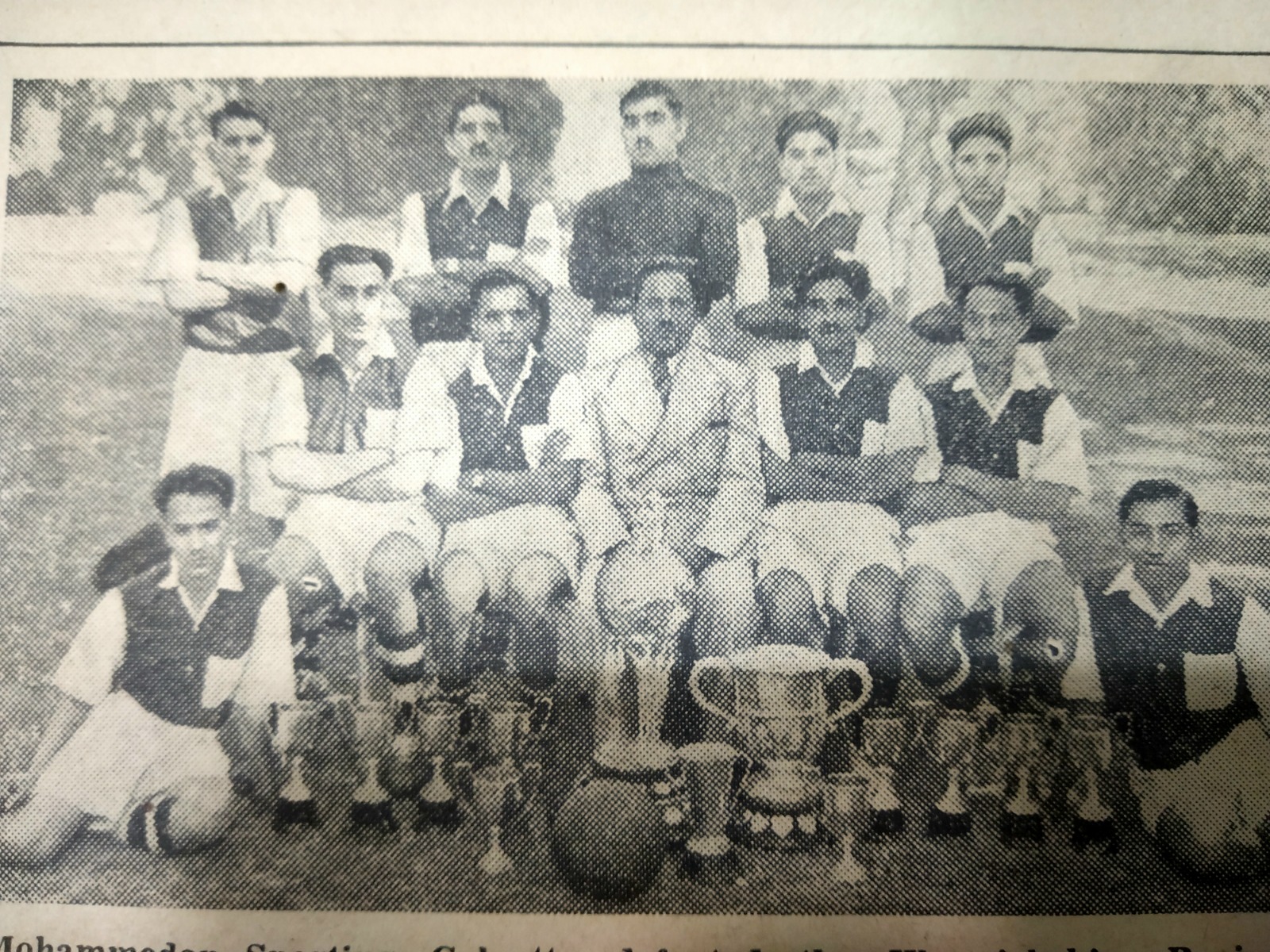
Heading into the 1940 season, Mohammedan Sporting was not a well-oiled machine operating at its absolute peak; rather, they were a team forged in the fires of institutional rebellion.
Between 1934 and 1938, the club had enjoyed an unprecedented golden era. They were the undisputed kings of the Calcutta Football League, winning the championship for five consecutive years. This extraordinary “Five in a Row” feat was achieved against fierce traditional rivals like Mohun Bagan and East Bengal, establishing the club as a perennial force in Bengal football and cementing their reputation as one of the subcontinent’s elite sporting institutions. This period established their tactical supremacy and brought immense pride to their supporters. However, in 1939, a fierce, irreconcilable confrontation with the Indian Football Association (IFA) committee over perceived injustices led to Mohammedan Sporting proudly boycotting the league.
While the boycott was a powerful statement of dignity, it came at a severe athletic cost. They entered the 1940 Durand Cup without the rhythm, chemistry, or match practice that only comes from a rigorous, competitive season.
“If you are in the matches, you are in competitive matches, you get to know about the combination of the team, about the makeup of the players, about the coordination,” Khan notes, highlighting the sheer disadvantage the squad faced. “But in 1940, there was a story before that. In 1939, Mohammedan Sporting didn’t play the IFA league. That was a great setback. If you are not playing any competitive match, it’s very difficult to coordinate between the players. So, without any combination, they played… they were not in a competitive mood.”
Operating in an era long before the advent of modern tactical analysts, sports psychologists, and specialized coaching staffs, the team relied entirely on the natural synergy of its players.
“There was hardly any coach,” Khan emphasizes. “Up to 1940, even 1957… you won’t find any formal coach. It was the senior players who used to guide the team.”
The foundation of this legendary squad, however, was the masterwork of visionary club official C.A. Aziz. A man ahead of his time, Aziz had spent the 1930s weaving together a diversely cosmopolitan team, scouting players from all over the subcontinent and boldly recruiting talent that rival clubs had overlooked.
Led by their daredevil captain and half-back, Masum, and anchored by the unsung hero Ali Hossain (often remembered in oral histories as Hussein) in goal, the squad was a patchwork of raw talent and fierce determination. Their staunch defensive line featured the imposing “Wall” Jumma Khan from Peshawar and the rugged Bachi Khan from Quetta, shielded by half-backs Bashir, Rashid Khan, and the captain Masum. The team utilized the traditional five-forward formation, an aggressively attacking setup that required impeccable timing and telepathic understanding. The frontline featured established names like Nur Mohammed Jr., Karim, Hafiz Rashid, and Abdur Rahman, alongside a brilliant, often-overlooked striker named Sabu.
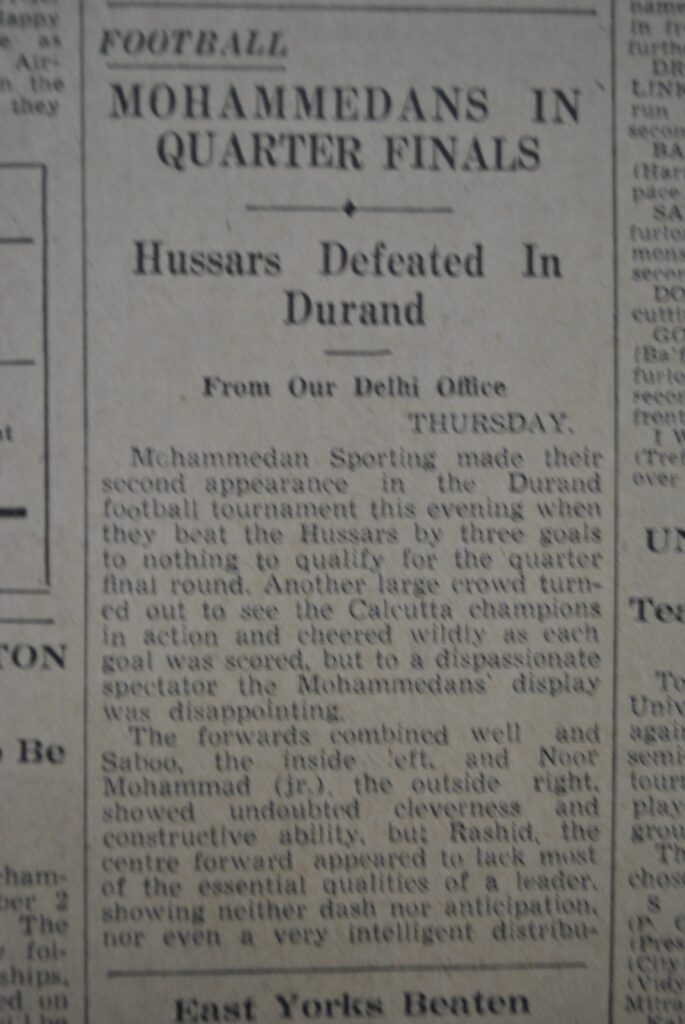
Despite their glaring lack of recent competitive play, their Durand Cup campaign began with a devastating statement of intent. On November 25, in the eliminating round, Mohammedan Sporting dismantled the Collision Sports Club with a staggering 5-0 victory.
“Sabu scored two goals,” Khan recalls, pulling from his decades of meticulous archival research. “Yes, hats off to Sabu. Many people have not heard the name of Sabu, but he was the pillar while scoring the goal. That 5-0 win was the starting combination which Mohammedan Sporting built upon.”
They carried this fierce momentum forward. While official archival match reports log a 2-0 quarter-final win over Union Club and a 3-1 semi-final victory against the Welch Regiment, the oral histories passed down—such as those citing sweeping 3-0 victories over Hassar Hass and the Welsh Regiment—all point to the exact same undeniable truth: Mohammedan Sporting was an unstoppable force, setting up a historic clash against the Royal Warwickshire Regiment in the capital.
The tension surrounding the 1940 Durand Cup Final was not confined to the tactical battles on the pitch. Asia’s oldest football tournament, which had traditionally been held in Simla, was shifted to Delhi in 1940 following a one-year suspension due to the outbreak of the Second World War. By the time Mohammedan Sporting marched into the capital, the political climate in India was boiling over. The independence movement was reaching a critical, fevered pitch, making the British administration increasingly paranoid and heavy-handed.
Every clash between Indians and the British, whether political, social, or athletic, held immense symbolic weight. This profound friction spectacularly spilled over into the officiating of the final match itself.
The chief match referee assigned to the game was an Indian—Captain Harnam Singh, then a civilian sergeant in the Army Office in the Delhi Cantonment. The stakes were considered so perilously high that Singh was provided a police escort directly from his house in the cantonment area to the stadium.
In a blatant, unapologetic display of colonial prejudice, two British military officers appointed as linesmen—Warrant Officers Oliphant and Greene, flatly refused to take the field. Their reasoning was strictly racial: they argued it was below their dignity to take orders from, nor officiate under the authority of, a comparatively junior Indian referee.
The standoff threatened to derail the historic final and plunge the tournament into chaos. The Durand Society organizers desperately tried to persuade the recalcitrant duo, but to no avail. It took the highest level of administrative intervention to salvage the match.
“Two British officers who were linesmen refused to take part as assistants under Captain Harnam Singh, who was the chief referee,” Khan details, shedding light on a forgotten hero of Indian football. “But after getting an ultimatum from the Viceroy of India, who warned them that they would be court-martialed if they refused, they lamented and continued the game. I have always suggested that defense officials should institute an award in the name of Harnam Singh because of his stand in that 1940 tournament.”
The threat of a court-martial from the Viceroy, Lord Linlithgow, successfully forced the errant linesmen to take up their duties on the touchlines, in a manner Captain Singh would magnanimously describe later as “competent and fully cooperative.”
Musing on the incident years later, Harnam Singh would reveal the very human toll of the standoff: “This tension only added to my pre-match nervousness. I felt better when Major Porter gave me a hot cup of cocoa laced with brandy.”
The stage was finally set. It was no longer just a football match; it was a highly publicized, deeply symbolic fight between the colonizers and the colonized, overseen by an Indian official who refused to be marginalized.
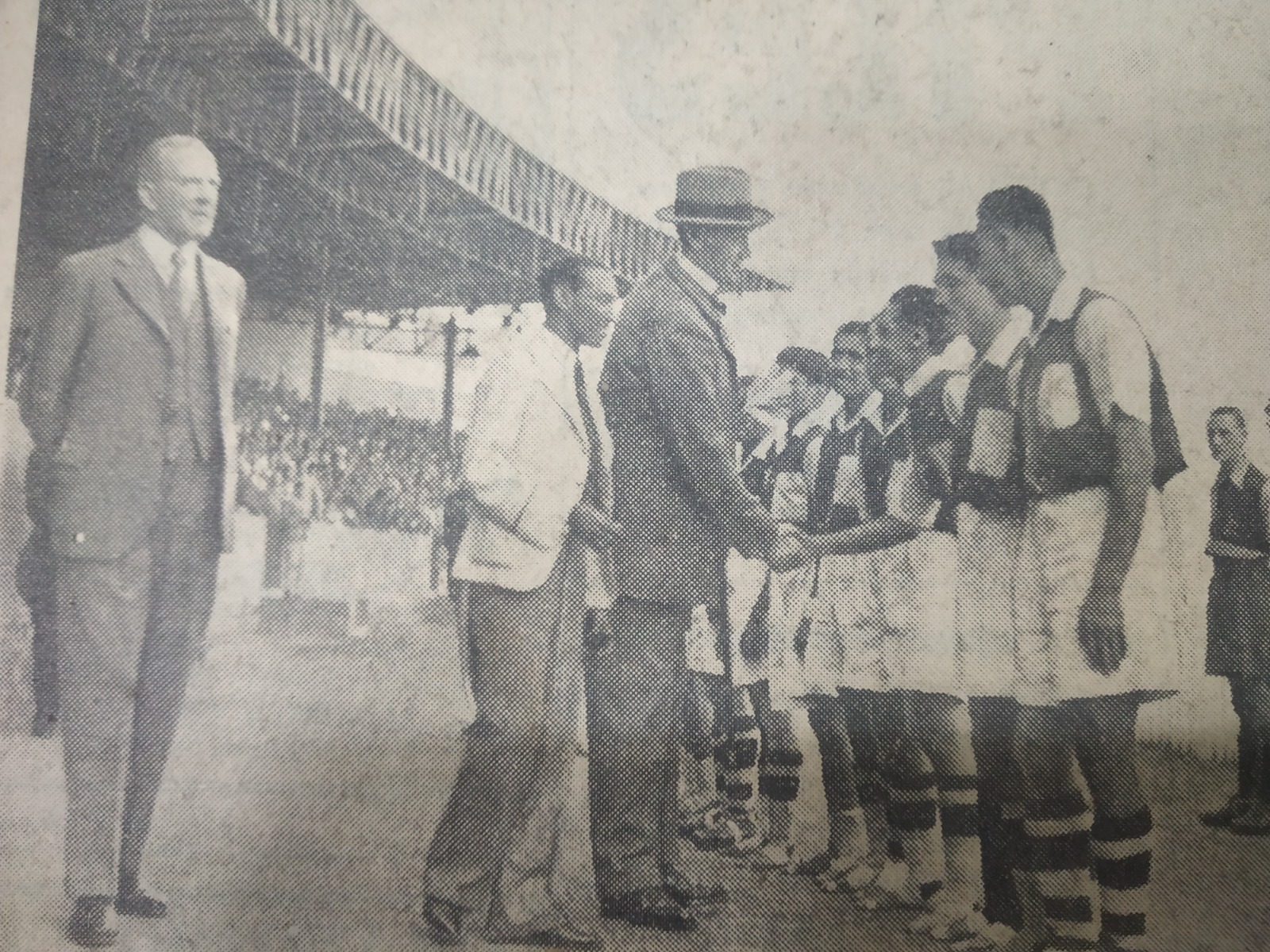
On December 12, 1940, the Irwin Amphitheatre was packed to absolute capacity. An estimated 100,000 spectators, a breathtaking attendance figure for the era crammed into the venue for the final of this 53rd edition of the tournament. The grandstands were heavily populated by high-ranking British military officials, colonial administrators, and an incredibly vocal, passionate Indian contingent. Eminent Muslim politicians flew in from far-off cities like Dacca, Bhopal, Hyderabad, and Calcutta, while thousands of common supporters arrived in trains and horse-drawn tongas to witness history.
From the referee’s first whistle, Mohammedan Sporting took the fight directly to the Royal Warwickshire Regiment. The British soldiers relied on their imposing physical strength, attempting to intimidate the Indian players with robust tackles and a rigid, disciplined defensive structure.
But Mohammedan Sporting answered with breathtaking agility, intricate passing, and the sheer pace of their five-man forward line. The match was a grueling physical and tactical battle, swinging from end to end.
The Black and White brigade dominated much of the opening half. Their relentless pressure cracked the Warwickshire defense, anchored by Cloves in goal and supported by the robust tackling of Lewis, Clay, and Wharton in the 24th minute. Sabu broke clear of the heavy-footed defenders and slipped a pass to Karim. While Karim’s initial effort was partially cleared in a frantic goalmouth scramble, Nur Mohammed Jr. was perfectly positioned to fire the rebound home, handing the Indians a 1-0 lead.
The British military outfit, however, was not about to surrender their crown easily. The Warwickshire Regiment came out of the halftime interval with vengeance and equalized almost immediately. In the 48th minute (just the third minute of the second half), a dangerous corner kick exposed a rare defensive lapse in the Mohammedan backline. Warman, the British centre-forward, capitalized on the chaos, driving the ball past Ali Hossain to equalize.
With the score locked at 1-1, the British forwards, including Williams, Harris, Sparks, Stanley, and the two Joneses applied sustained, suffocating pressure in the closing stages.
The defining moment, however, belonged to the Black and White forwards, engineered by a moment of pure, unadulterated brilliance on the counter-break.
In a breathtaking sequence of play against the run of relentless British pressure, the ball was pushed out wide. Following a slick interplay with Karim and Nur Mohammed Jr., a pinpoint cross was delivered into the penalty area. With ice in his veins and the weight of a hopeful nation on his shoulders, Sabu timed his run to absolute perfection. He connected with the ball from close range, sending a thunderous strike past the British goalkeeper and into the back of the net. (For generations, stories of this famous victory were narrated in the houses and bylanes of Old Delhi, with many oral histories passionately crediting centre-forward Hafiz Rashid as a vital force in the scoring tally alongside Sabu).
That decisive goal secured a 2-1 victory. As the final whistle blew, the Irwin Amphitheatre erupted. Mohammedan Sporting had not just won a trophy; they had conquered an institution.
Because of the era’s limited communication technology, the raw emotion of the victory in Delhi took hours to physically manifest in Bengal. But when it did, it arrived on the wings of birds.
“During those days, communication was not so strong,” Khan paints the vivid, almost cinematic picture of how the news spread. “So whenever Mohammedan Sporting won any match, they used to write a small message on a piece of paper and tie it to the legs of a parrot. They used to let fly the parrot, and people in Kolkata waited and waited… But when they got the news, they rejoiced and came onto the roads and celebrated like anything.”
The resulting explosion of joy could not be contained by British curfews or colonial restrictions. It was a victory that fundamentally transcended the sport and spectacularly shattered communal lines.
The streets of Kolkata transformed into a sprawling, spontaneous carnival across predominantly non-Muslim neighborhoods alike, citizens celebrated shoulder-to-shoulder. Football had provided a shared language of resistance.
“It was a monumental achievement,” Khan states with immense pride. “Every Indian, irrespective of caste, creed, and religion, enjoyed that match and congratulated Mohammedan Sporting on the win. All the nationalist leaders congratulated them. It made a huge impact on the independence movement, much like Mohun Bagan did in 1911. We were coming very close to getting independence, and after 1940, we got a sort of speed on that track. That was the win against the regime who made us slaves, and we broke that chain.”
This profound unity was a hallmark of the era. Khan notes that earlier in the decade, when star player Hafiz suffered a severe broken leg during a match, entire communities, not just football fans fasted and prayed for his recovery. The 1940 Durand Cup win was the ultimate reciprocation of that community love, a gift of immense joy to a population suffering under the heavy yoke of colonial rule.
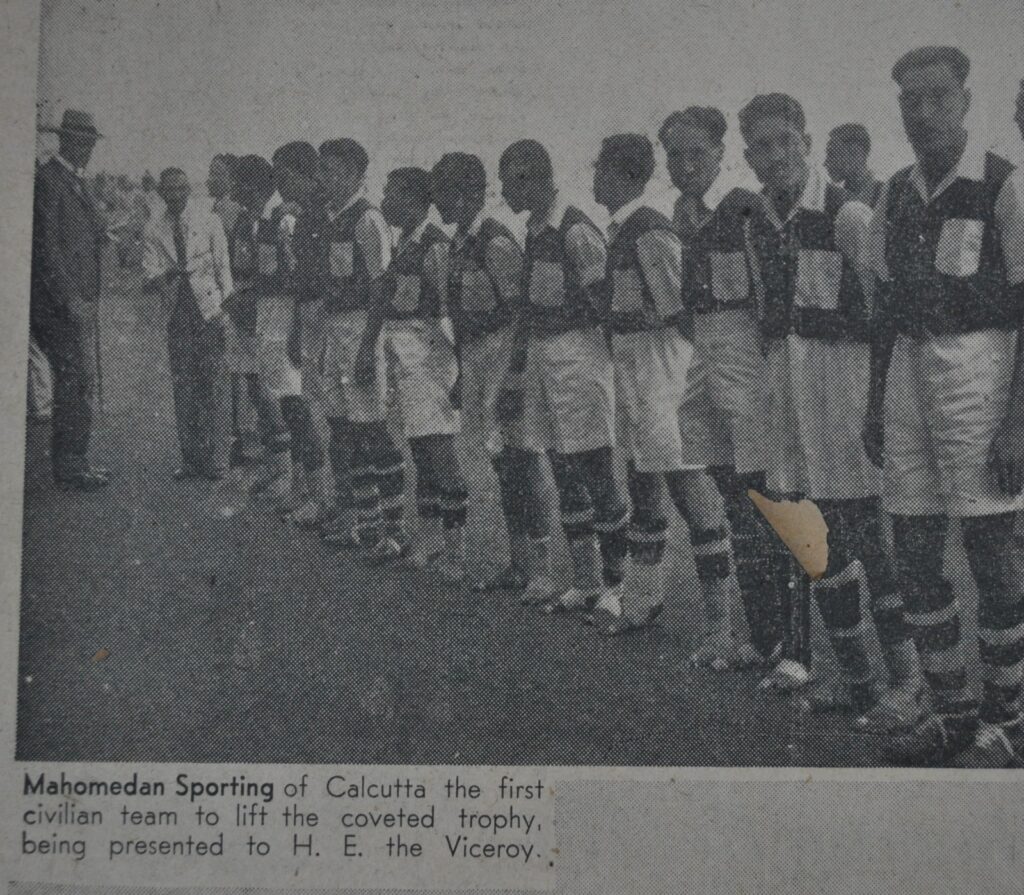
The 1940 Durand Cup victory was a landmark moment for Indian sport, celebrated as a symbol of national pride during a turbulent period in the subcontinent’s history.
That very same season, Masum’s unstoppable squad would go on to defeat the Bangalore Muslims 1-0 to lift the Rovers Cup, completing a historic double. Remarkably, they became the first team in the history of the Rovers Cup (which began in 1891) to win the entire tournament without conceding a single goal. Paired with their earlier successes, many old-timers consider this 1940 squad the greatest ever assembled, as they became the first Indian club to win the so-called “Triple Crown”—the Calcutta Football League, the Durand Cup, and the Rovers Cup in the exact same year.
It was the crowning jewel of Mohammedan Sporting’s first great era, but it also represented the peak of a specific kind of footballing purity in India—a time when players were driven almost entirely by community identity, loyalty, and a shared patriotic fervor.
As India gained its hard-fought independence in 1947, the geopolitical and economic landscapes shifted dramatically, and so too did the nature of Indian football. The sport slowly began its inevitable transition toward professionalism and commercialization.
“During those times, that religious and ethnic attachment was there,” Khan reflects on the changing tides of the sport. “But this period of professionalism became more evident. Even though players didn’t get the sort of amount today’s players are getting, the financial attachment started taking precedence since the late 1950s. You saw great players like Ahmed Khan always playing for East Bengal, or Rahmatullah playing for Mohun Bagan. The pure community attachment was not in comparison to the financial benefits that arrived later.”
While the financial dynamics of Indian football evolved, with players rightfully seeking monetary compensation for their world-class talents, the historical weight of the 1940 triumph remained untouched. Mohammedan Sporting would go on to enjoy subsequent golden periods; including a historic victory at the Aga Khan Gold Cup in Dhaka in 1960 and dominant Federation Cup runs in the 1980s, but nothing could ever replicate the sheer socio-political impact of that winter afternoon in Delhi.
Today, as modern tactical systems dictate the pace of the Indian Super League and multi-million-dollar sponsorships adorn the jerseys of legacy clubs, the 1940 Durand Cup victory stands as far more than a mere statistical milestone tucked away in archival record books.
It remains a living, breathing testament to a time when football was an explicit act of patriotism. It is a story of a boycotted team that refused to break, a courageous Indian referee who stared down the British military, and a flock of messenger birds that carried the triumphant hopes of a united India upon their wings.
