From Homagama to history: Defenders FC’s first march through the Durand Cup
East Bengal win record-equalling 17th Durand Cup with thumping victory over Mohun Bagan
Midul Doley and the making of a Durand Cup story nobody saw coming
Eleven men & A Village fairy tale: Chesterpoul Lyngdoh and the rise of Nongkseh on the Durand Cup stage
The fear was gone – That was the moment Birendra Thapa knew Shillong Lajong had changed
Mohun Bagan prevail on penalties over defending champions NorthEast United to set up Kolkata Derby final
Lalrinliana Hnamte slipped into the Durand Cup quietly – Then made sure everyone noticed
East Bengal FC edge SC Delhi on penalties to reach 135th IndianOil Durand Cup final
A Stage to Shine: Emerging Talents finds their moment at the 135th IndianOil Durand Cup
A mother’s stick, A Captain’s armband: Kenstar Kharshong’s Durand Cup Odyssey
The long way home: Halicharan Narzary’s return to Bodoland
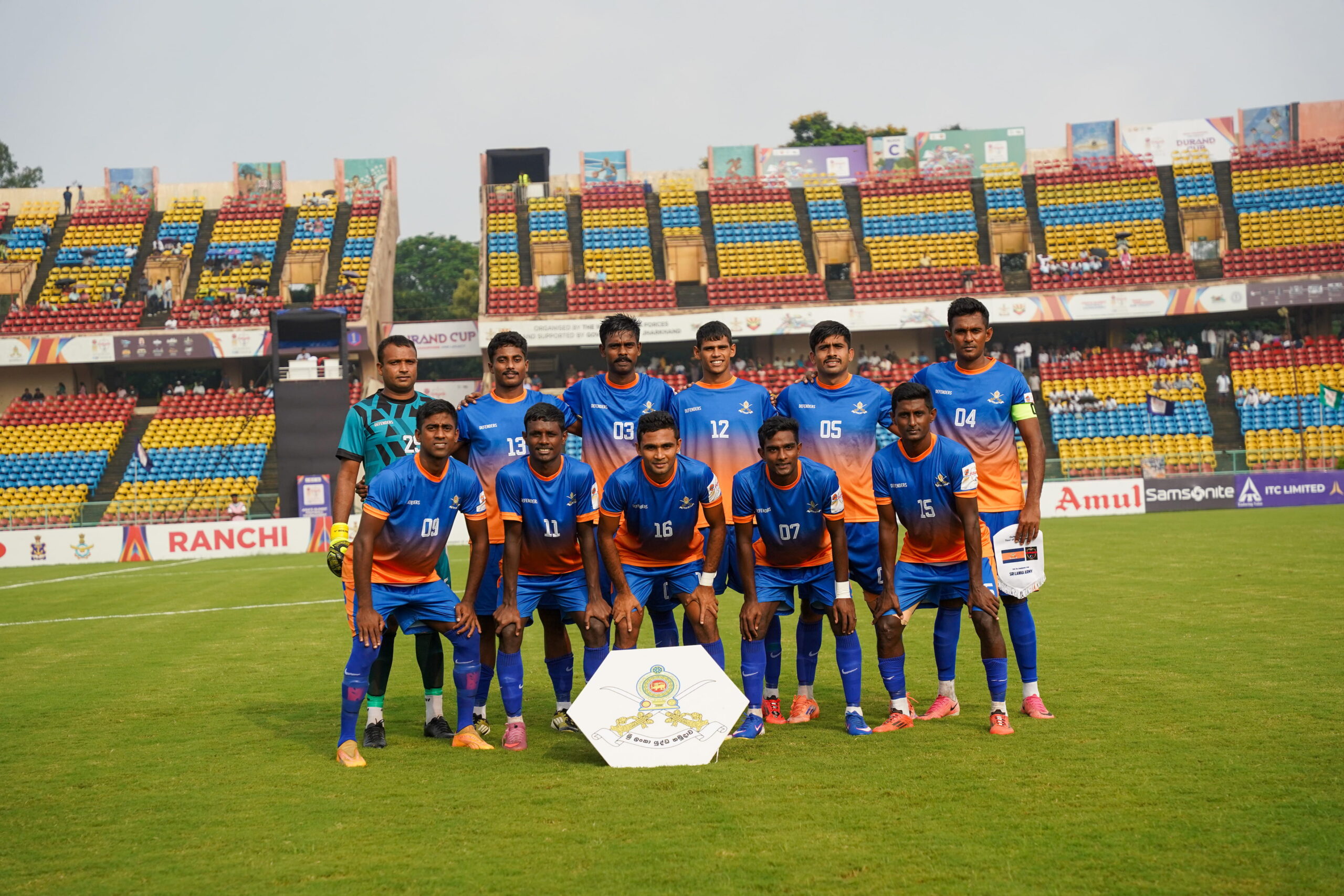
Somewhere over the Bay of Bengal, thirty-odd footballers and support staff from Colombo and Homagama would have felt the pilot announce the descent into Ranchi, a city none of them had set foot in before, for a tournament most had grown up hearing about only in passing. By the time they walked out at the Birsa Munda Stadium, boots studding into turf that Jharkhand had only just begun offering to Asia’s oldest football competition, the unfamiliarity cut both ways. Ranchi was hosting the Durand Cup for the first time in its 138-year existence. Defenders FC were playing in it for the first time in theirs.
Consider what those 138 years actually contain. The tournament was already three decades old when the Wright brothers flew. It broke for both World Wars and came back each time missing regiments that never returned to defend their trophies. Somewhere in that timeline, a silver ball on a wooden stand was retired for good after a team called the Highland Light Infantry refused to stop winning it, and a rolling cup took its place instead. Defenders FC arrived into all of that history carrying a far shorter story of their own: a football team raised inside an army barracks in 1963, renamed only in 2018, stepping for the first time through a door that has stood open in Shimla and then Delhi and now Jharkhand since before either Sri Lanka or independent India existed as nations. That collision of a very old institution and a very determined newcomer is where this story actually begins.
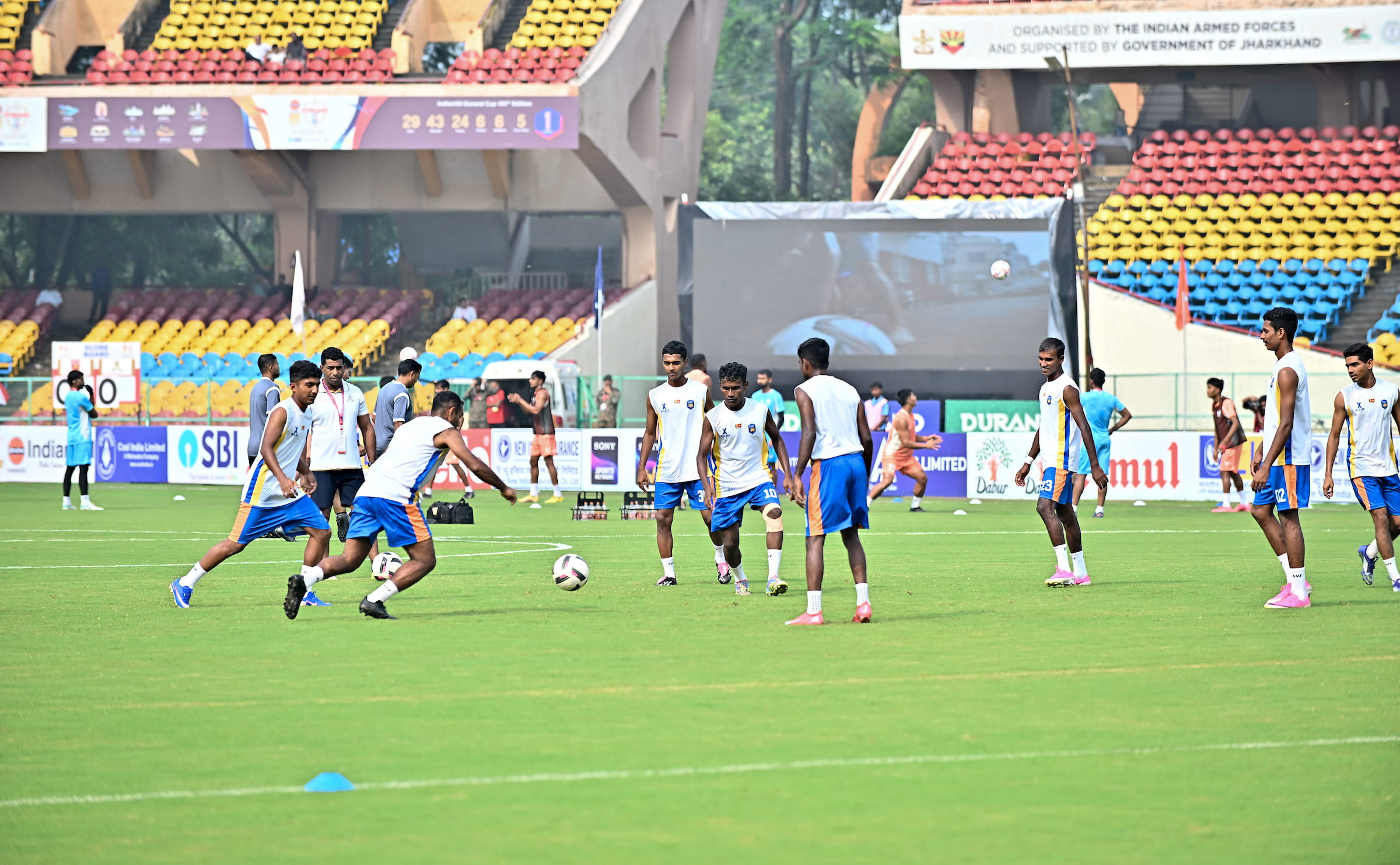
A Handshake Across History
For head coach C.P. Wanigasooriya, the significance was not lost the moment the invitation arrived. “It’s a proud moment for all of us,” he says, with the kind of understatement that carries more weight than any grand declaration. “Being invited to such a historic tournament means recognition for our club and the Sri Lanka Army. It’s truly special.”
There is a quieter thread running underneath that pride, one that has less to do with silverware and more to do with lineage. The Durand Cup was conceived by a foreign secretary looking to keep British Indian troops fit and sharp between postings, and for decades it stayed a strictly regimental affair before Mohun Bagan became the first civilian club allowed to compete, in 1925. A tournament built on soldiers finding an outlet on the pitch has spent well over a century quietly rewarding the very instincts a military side is trained to have.
“As a military-backed club, we feel a strong connection with the traditions and discipline of the Durand Cup,” Wanigasooriya explains. “It feels like we belong here.” It is not a line dressed up for effect. Ask any old Durand Cup hand and they will tell you the tournament has always rewarded exactly those qualities — discipline, structure, and the refusal to break formation under pressure.
The Long Walk from Army FC
To understand what this debut means, it helps to look at where Defenders FC have come from. Founded as Sri Lanka Army SC and based out of Homagama, the club spent decades quietly building one of the more decorated cabinets in Sri Lankan football — two Sri Lanka Champions League titles, in 2009 and 2019, and a string of domestic cup finishes. They have tested themselves on the continental stage too, taking part in the AFC President’s Cup on two occasions and going toe to toe with Bhutan’s Paro FC in the 2020 AFC Cup preliminary round, a tie that finished level on aggregate before away goals decided it.
The rebrand to Defenders FC in 2018 was never meant to be a clean break from that past. It was a widening of ambition. “We’ve grown a lot from Army FC to Defenders FC in terms of professionalism and structure,” Wanigasooriya says, “but our core values — discipline, teamwork, and commitment — remain the same.” It is the kind of continuity that clubs with far bigger budgets often struggle to hold on to. Defenders FC have kept their spine intact while changing their skin.
Ranchi Opens Its Doors
If the history of the tournament gave the visit its meaning, the city of Ranchi gave it its warmth. Neither side quite knew what to expect from the other, and Defenders FC found themselves among the first international guests the city ever welcomed to the sport.
“The experience has been excellent,” Wanigasooriya says. “Great hospitality in Ranchi, a fantastic stadium, and very passionate football fans. We’ve really enjoyed it.” He returns to that idea more than once during conversation — not the scoreline, not the standings, but the sound of a crowd that had never seen his players before and still chose to embrace them. “When we played in front of such an energetic crowd, we truly felt how special and historic this tournament is,” he adds. For a side making its bow on foreign soil, that reception mattered as much as any tactical takeaway.
Measuring Themselves Against the Best
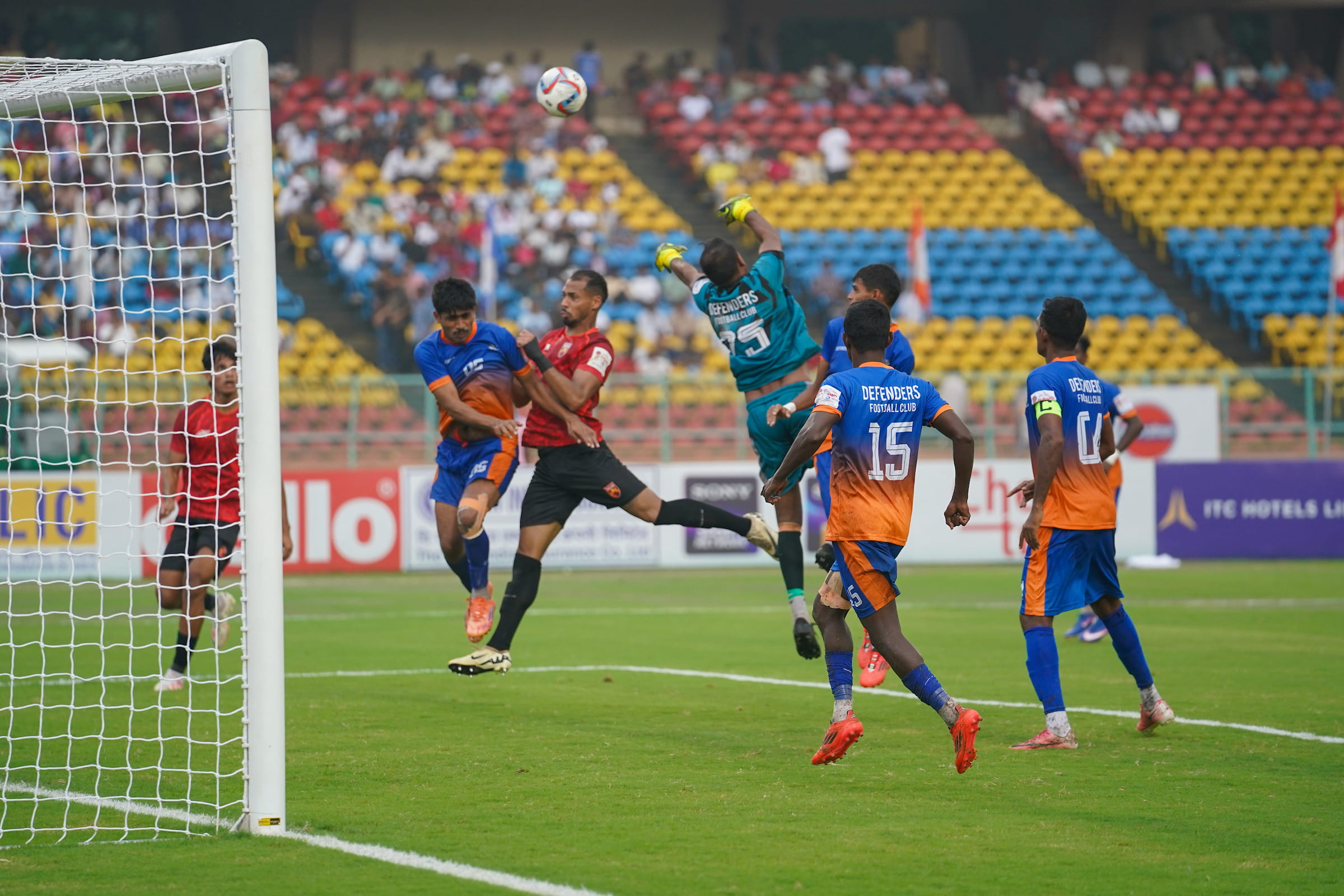
Group C was never going to offer Defenders FC a gentle introduction. Drawn alongside Jamshedpur FC, Sporting Club Delhi, and the Indian Air Force Football Team, they found themselves facing three sides built on Indian football’s deepest structures — ISL pedigree, full-time professional systems, and the relentless conditioning of service football. The gulf showed in patches, and Defenders FC absorbed lessons the hard way in Ranchi’s heat.
But it is precisely that intensity Wanigasooriya points to when asked what his side will carry home. “The competition is very high,” he says. “We’ve learned a lot about intensity and tactical play. These experiences will help us improve back home.” There is no hedging in that answer, no attempt to dress up the results as something they were not. It is the honest calculus of a coach who understands that a debut campaign is rarely measured in points. Against Indian Air Force, midfielder N.M. Aflal’s late strike, cutting a one-sided afternoon down to size, was the kind of moment that tells a coaching staff their players never stopped competing, no matter the scoreboard.
 Football as a Bridge Between Two Nations
Ask Wanigasooriya about the bigger picture, and he steers the conversation toward something larger than results. Sri Lanka and India share a coastline, a cricketing rivalry that needs no introduction, and now, thanks to tournaments like this one, an emerging footballing conversation. “These tournaments are very important,” he says. “They help build friendship, understanding, and mutual respect between our two countries through football.” It is a simple sentiment, but not a small one. Long after this year’s group stage fades from the record books, the image of a Sri Lankan army side sharing a pitch, a stadium, and a city with Indian football fans will likely be what lingers.
A First Chapter, Not the LastThere is an old superstition in football that debuts are best judged not by what happens on the pitch, but by whether a team leaves wanting to come back. On that count, Defenders FC’s answer is unambiguous. “Next time, we would aim to perform better and go further in the tournament, with more experience and confidence,” Wanigasooriya says, already thinking about a second visit before the first has even concluded.
He leaves one final thought for the people who welcomed his team into a tournament nearly as old as organised football itself. “I want to thank the Indian fans for their support,” he says. “We hope this is just the beginning of a long and strong relationship with the Durand Cup.” Then, almost as an afterthought, the sentence that perhaps says the most about the club he leads: “Defenders FC represents discipline, unity, and the spirit of the Sri Lanka Army. We will continue to grow and make our country proud.”
Sixty-two years after a group of army footballers first laced up their boots in Homagama, their successors have written a new opening line into Defenders FC’s story, one that begins under the lights of the Birsa Munda Stadium and, if Wanigasooriya has his way, is far from finished.
