Nongkseh’s Durand Cup fairytale: How a Shillong village club went from third division to India’s oldest tournament
East Bengal win record-equalling 17th Durand Cup with thumping victory over Mohun Bagan
Midul Doley and the making of a Durand Cup story nobody saw coming
Eleven men & A Village fairy tale: Chesterpoul Lyngdoh and the rise of Nongkseh on the Durand Cup stage
The fear was gone – That was the moment Birendra Thapa knew Shillong Lajong had changed
Mohun Bagan prevail on penalties over defending champions NorthEast United to set up Kolkata Derby final
Lalrinliana Hnamte slipped into the Durand Cup quietly – Then made sure everyone noticed
East Bengal FC edge SC Delhi on penalties to reach 135th IndianOil Durand Cup final
A Stage to Shine: Emerging Talents finds their moment at the 135th IndianOil Durand Cup
A mother’s stick, A Captain’s armband: Kenstar Kharshong’s Durand Cup Odyssey
The long way home: Halicharan Narzary’s return to Bodoland
There is a hill above Shillong where the pines still stand in ranks, the way they must have stood when the first Khasi traders pitched their iron and salt at a forest clearing and called the place Nongkseh, the village of the pine. Long before anyone in these hills had heard of a football, this was already a marketplace, a crossing point where paths met and business got done under the trees.
It feels almost too neat that eight centuries later a football club would rise out of the same clearing and, in about eighteen months, walk in through the front door of Indian football’s oldest and grandest tournament.
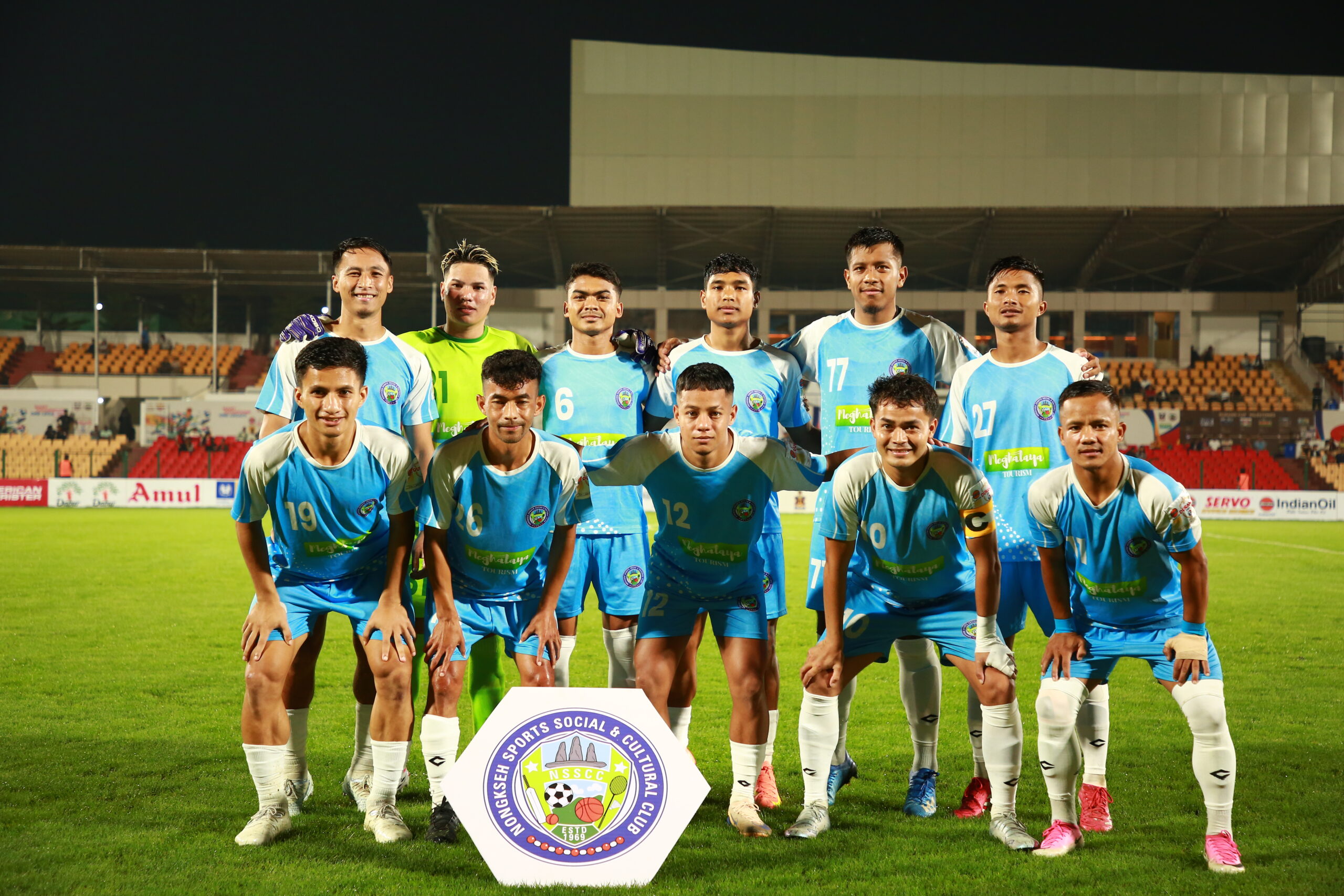
Nongkseh Sports Social and Cultural Club were not supposed to be here. Not this soon, not this fast, and certainly not with the swagger they carried into the 135th IndianOil Durand Cup, where they took their first bow on the biggest stage domestic Indian football has to offer, in a town where their own supporters could walk to the ground.
To understand why that matters, you have to go back further than the club’s recent, dizzying rise, to the name itself, and to the kind of place Nongkseh actually is.
A village before it was a suburb
In Khasi, nong means village and kseh is the local pine, Pinus kesiya, the tall, resin-scented tree still lining the ridges above Shillong. Nongkseh, plainly translated, means the village of the pine trees.
It sits on the Rim, the edge of the plateau on which Shillong was built, and long before the British climbed these hills to found their hill station, Nongkseh was already a trading post, its bazaar doing brisk business in iron smelted across the Khasi Hills, a place where value changed hands long before it was folded into a growing city.
That history matters because Nongkseh, unlike a franchise stitched together for a marketing calendar, did not arrive from nowhere. It is, first and foremost, a locality with its own Dorbar Shnong, the traditional Khasi village council that still governs local affairs by consensus under a headman known as the Rangbah Shnong.
When Nongkseh SS&CC unveil a jersey or lift a trophy, the club is typically received first by the Raid Sawkur Nongkseh and the local headman before any football federation banquet. Club and village council are, in the most practical sense, the same community wearing two different hats.
The full name gives the game away too. “We are called Nongkseh Sports, Social and Cultural Club for a reason,” says club president Daniel M. Thangkhiew. Alongside football, the club runs basketball, badminton, table tennis and traditional indigenous games, and every August turns Nongkseh into something closer to a village fair than a training ground, with singing, dance and poetry-writing competitions drawing in children, young people and the elderly alike. Football was never meant to be the whole of what Nongkseh SS&CC is.
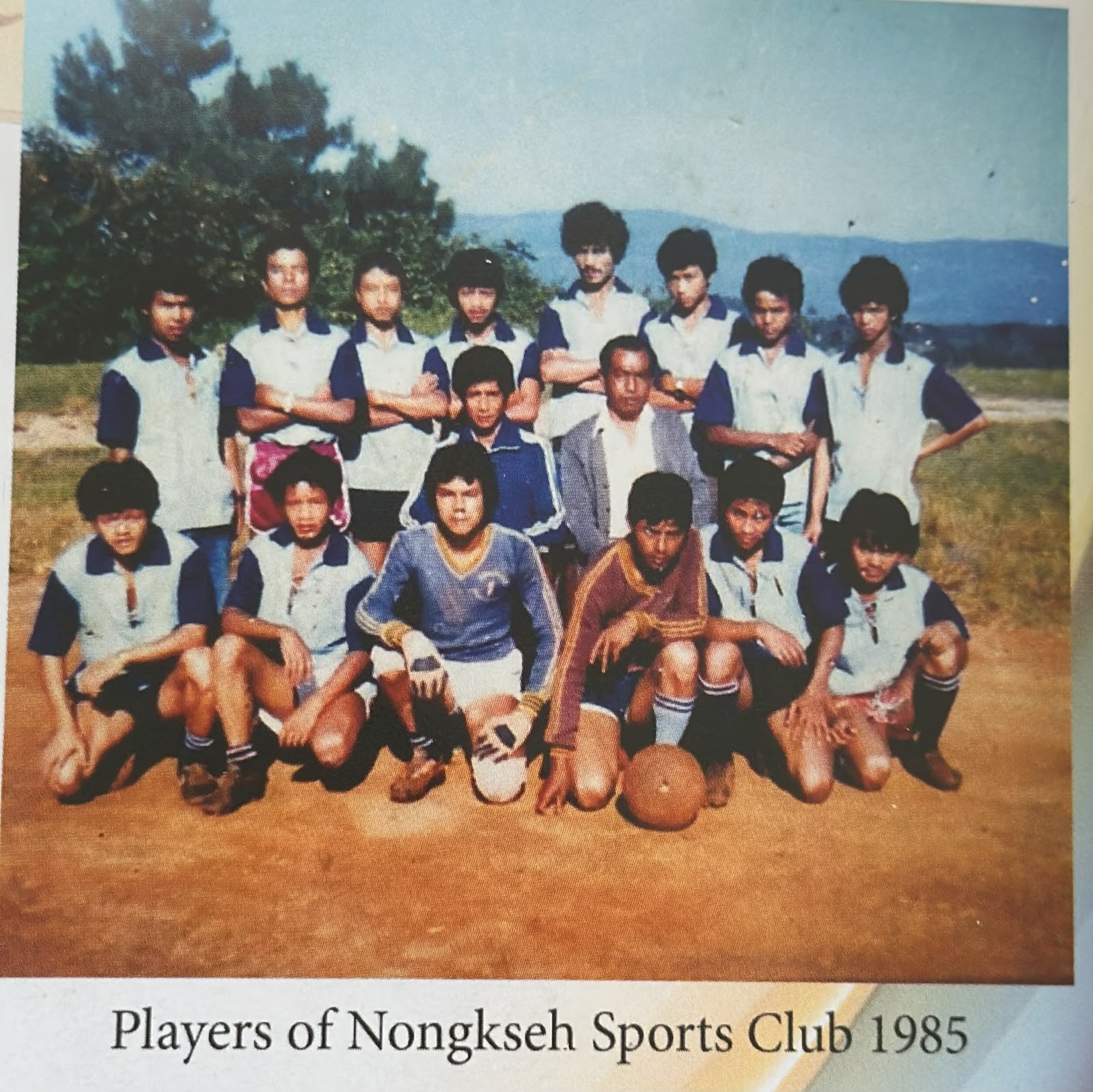
The football club itself was founded in 1969, one of the older names in Shillong’s crowded football ecosystem, a city where clubs function less like companies and more like extensions of neighbourhood identity. For the better part of five decades, Nongkseh SS&CC did what most such clubs do: it survived, without ever quite arriving.
“We kept moving between the Fourth Division, Third Division and Second Division, often getting promoted and then relegated again,” Thangkhiew says of those years, a tidy summary of the purgatory that swallows clubs without deep pockets or a settled plan. A proud old name, but a modest one, followed by a few hundred people who knew the players by their first names.
The turn
What changed was not money, at least not in the way football usually understands that word. It was organisation, beginning the day Thangkhiew took charge in 2023. He kept faith with the existing squad, before deciding it would not be enough.
“Football is evolving rapidly across the world, and if we wanted to compete, we had to raise our standards,” he says. Promotion from the Third Division came first, then a jump through the Second and into the First inside a couple of seasons, a rate most footballing cultures would call reckless. When the club opened trials for the 2025 First Division campaign, 567 players turned up hoping for a place in the squad.
The recruitment that followed, in 2025, read like a raid on Indian football’s lower and middle tiers. Chesterpoul Lyngdoh, a familiar I-League name, came in to captain the side. Hardy Cliff Nongbri, a former Lajong captain with I-League pedigree, arrived to lead the line, telling the club he was “fully committed to helping the team secure promotion to the Shillong Premier League,” a modest ambition for a player who had spent years several tiers higher.
Goalkeepers, defenders and forwards followed from clubs across the country, taking what looked like a step down. “I immediately felt that this squad had real potential,” Thangkhiew says.
The results arrived almost as fast as the signings. Nongkseh went through the 2025 First Division unbeaten and added the SSA Champions Cup for good measure, beating Shillong Lajong, one of the true institutions of northeastern Indian football, 2-1 in a final watched by a reported twelve thousand people at Polo Ground. It was the kind of result that reorders how a town thinks about a team.
Then came the truly startling part. In their first appearance in the Meghalaya State League, Nongkseh went all the way to the final and won it, the hard way. Coach Richard Nongneng had told reporters beforehand that his side respected Langsning FC but trusted “our players will do well and lift the trophy”: Nongkseh trailed at half-time after an unlucky own goal before captain Hardy Cliff Nongbri levelled just after the hour, and substitute Shano Tariang, running onto a Kitboklang Pale pass, completed the turnaround with seven minutes left.
Chief Minister Conrad K. Sangma presented the trophy that evening, the league’s first debut champion. “What a final,” he said afterwards.
By January, Nongkseh were on the road, representing Shillong outside Meghalaya for the first time, at the Chief Minister’s Gold Cup in Jorethang, Sikkim. They beat Eastern Railway of Kolkata in their opener, then dismantled I-League side NEROCA FC 4-0 despite their captain’s absence with a stitched facial injury.
They edged past home favourites Red Panda FC in the semi-final through a Sheen Stevenson strike, then beat BSF Jalandhar 1-0 in the final. Playmaker Kynsai was named Man of the Tournament and handed the keys to a car, and NorthEast United FC later invited the champions for a pre-season friendly in Guwahati, unthinkable two years earlier.
When the players flew home, the Raid Sawkur Nongkseh gave them a felicitation. Local legislator Ronnie V. Lyngdoh noted the achievement had come with a squad built largely around young Khasi players, and hoped its ambitions would not stop at the state’s border.
They did not. Weeks later Nongkseh were promoted to the Shillong Premier League as champions of champions, then won the Meghalaya State League that June, a run that opened the door to I-League 3. Three trophies inside a single unbeaten stretch gave the club its platform.
When fixtures for the 135th IndianOil Durand Cup were drawn up this July, Nongkseh SS&CC appeared among the debutants for the first time, grouped in Shillong alongside Shillong Lajong, Langsning FC and newcomers Mumbay FC, with matches at the Jawaharlal Nehru Stadium, Polo Ground, a short walk from where most of their own supporters live.
Home advantage, in every sense
The campaign itself unfolded exactly as a debut season should: painful, instructive, and, right at the death, thrilling. They opened against Shillong Lajong on July 31 and lost 2-0, a result Thangkhiew reads with more nuance than the scoreline suggests. “We played well in the first half,” he says.
Five days later came Langsning FC in a fevered Shillong derby, Nongkseh racing into a two-goal lead through Shano Tariang and Hardy Cliff Nongbri before the hosts hauled themselves level with two headers in five second-half minutes. “We scored two goals in the opening half but couldn’t maintain that momentum after the break,” Thangkhiew says, an honest assessment from a club president who does not flatter his own team.
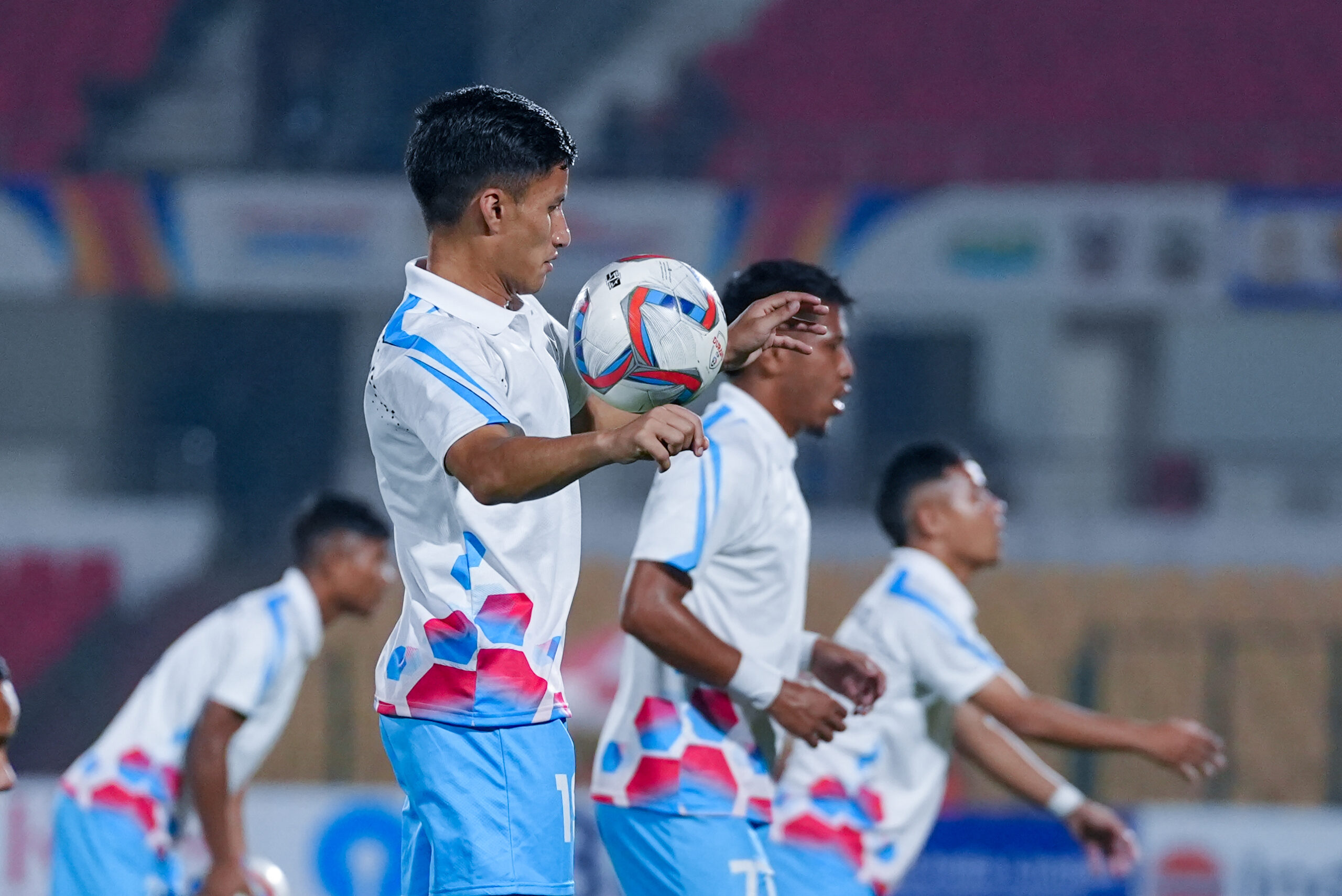
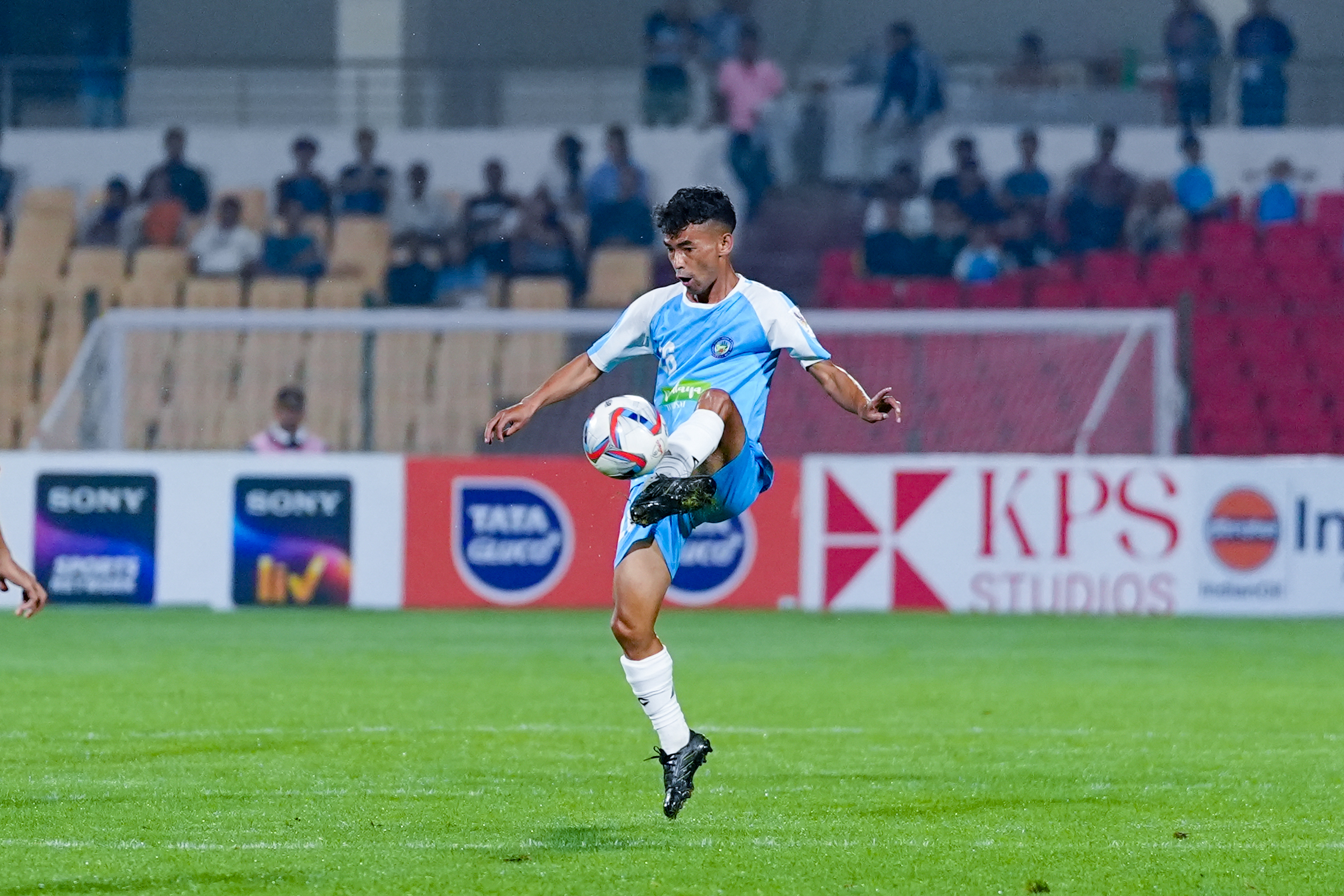
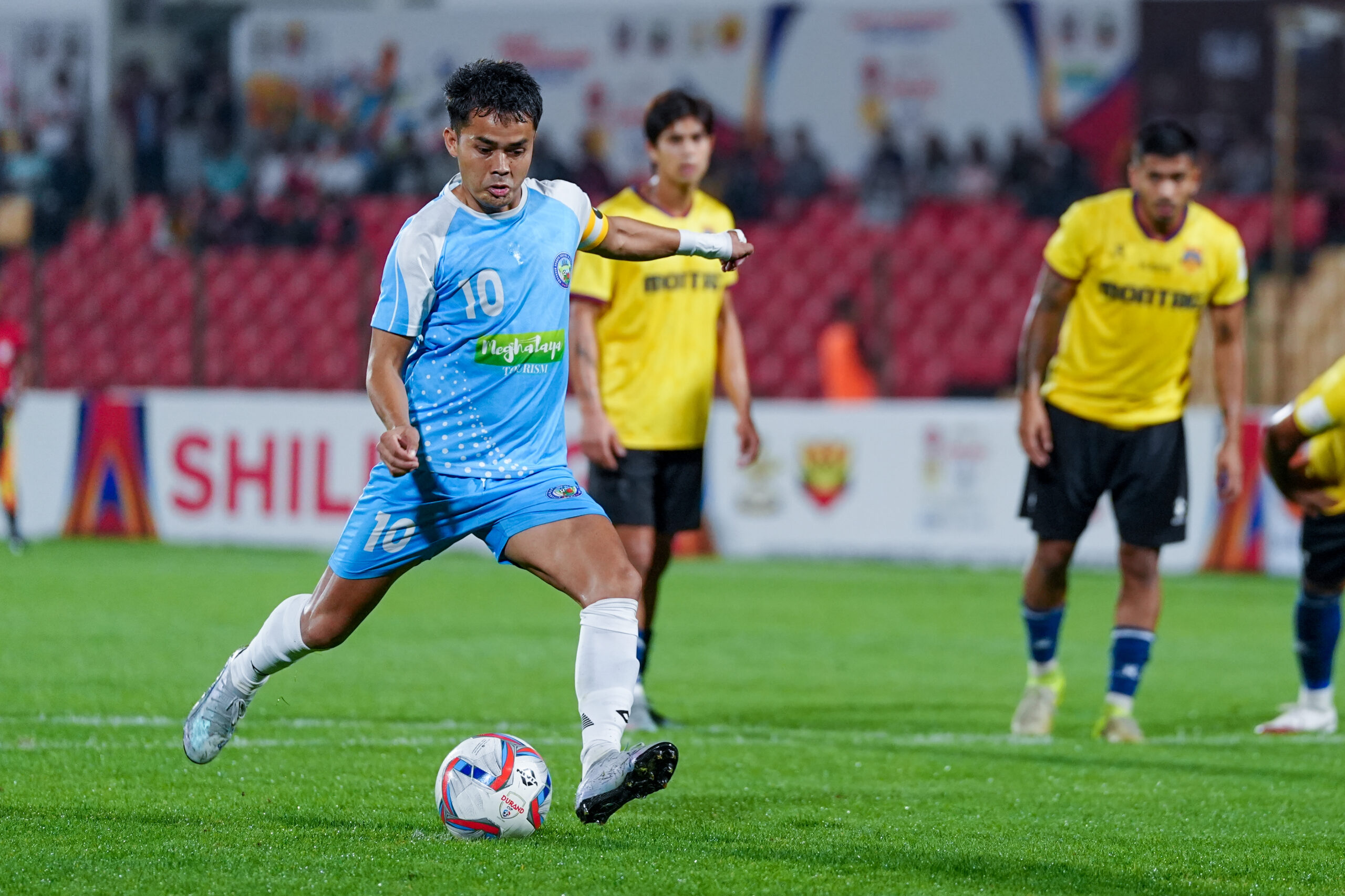
Then, on August 11, with qualification already beyond them, Nongkseh produced the most complete ninety minutes of their short national life, beating Mumbay FC 7-0. Hardy Cliff Nongbri opened from the penalty spot and later added a tap-in for his brace, but it was Dawancha Carlos Challam who caught the eye with a brace of his own, one a dazzling solo effort past three defenders finished coolly at the near post.
Chesterpoul Lyngdoh, more often a defender than a finisher, got on the scoresheet too, and Kitboklang Pale and Sheen Stevenson rounded off the rout. It lifted Nongkseh to second in Group E on four points, level with Langsning but ahead on goal difference, though Shillong Lajong’s game in hand meant the run stopped there, in the group stage, on its highest note.
“Today’s victory has given us confidence and motivation,” Thangkhiew says. “More importantly, it has rewarded our supporters. Nongkseh has a passionate and loyal fan base, and it’s wonderful to see them go home happy. We are happy too.”
There is no knockout football to show for the club’s first Durand Cup, but there rarely is for a debutant, and nobody pretends otherwise. What they carry instead is a story most modern clubs cannot manufacture: five decades of quiet existence, a community that never let the name die, and then two remarkable years in which a Third Division side from a hillside village became state champions, swept a tournament three states away, and gave Asia’s oldest football stage three games to remember them by.
His attention has already turned homeward. “Now our focus shifts back to the Shillong Premier League,” he says. “We’ve already won our opening match, and when the league resumes on the 19th, we hope to carry forward this winning momentum.”
The pines are still standing on the ridge above Nongkseh. This summer, for the first time, so is a football club that carries their name onto a stage as old as the trees themselves would like to believe they are.
