Where football lives – Why Durand Cup feels at home in Imphal
East Bengal win record-equalling 17th Durand Cup with thumping victory over Mohun Bagan
Midul Doley and the making of a Durand Cup story nobody saw coming
Eleven men & A Village fairy tale: Chesterpoul Lyngdoh and the rise of Nongkseh on the Durand Cup stage
The fear was gone – That was the moment Birendra Thapa knew Shillong Lajong had changed
Mohun Bagan prevail on penalties over defending champions NorthEast United to set up Kolkata Derby final
Lalrinliana Hnamte slipped into the Durand Cup quietly – Then made sure everyone noticed
East Bengal FC edge SC Delhi on penalties to reach 135th IndianOil Durand Cup final
A Stage to Shine: Emerging Talents finds their moment at the 135th IndianOil Durand Cup
A mother’s stick, A Captain’s armband: Kenstar Kharshong’s Durand Cup Odyssey
The long way home: Halicharan Narzary’s return to Bodoland
The floodlights at Khuman Lampak Main Stadium haven’t even flickered on yet, and already the day’s business is done in a dozen other places.
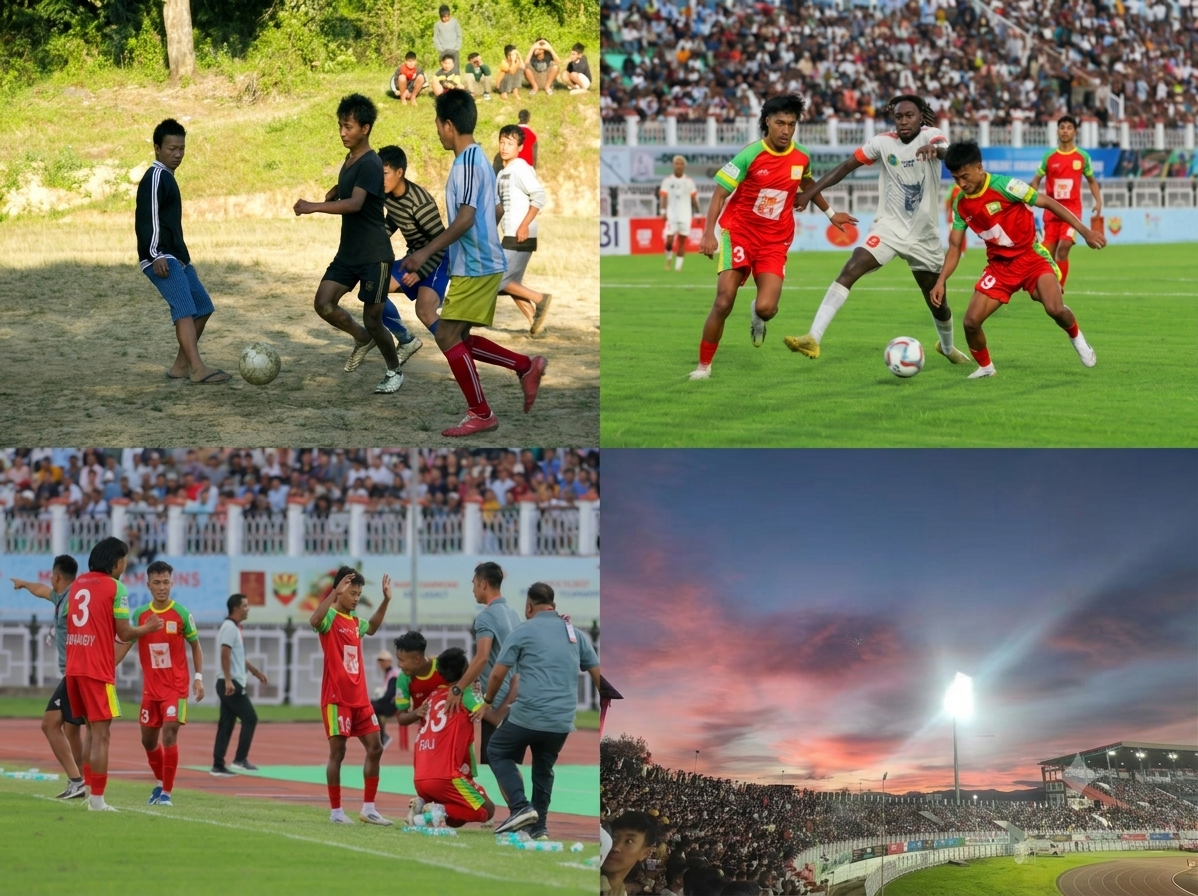
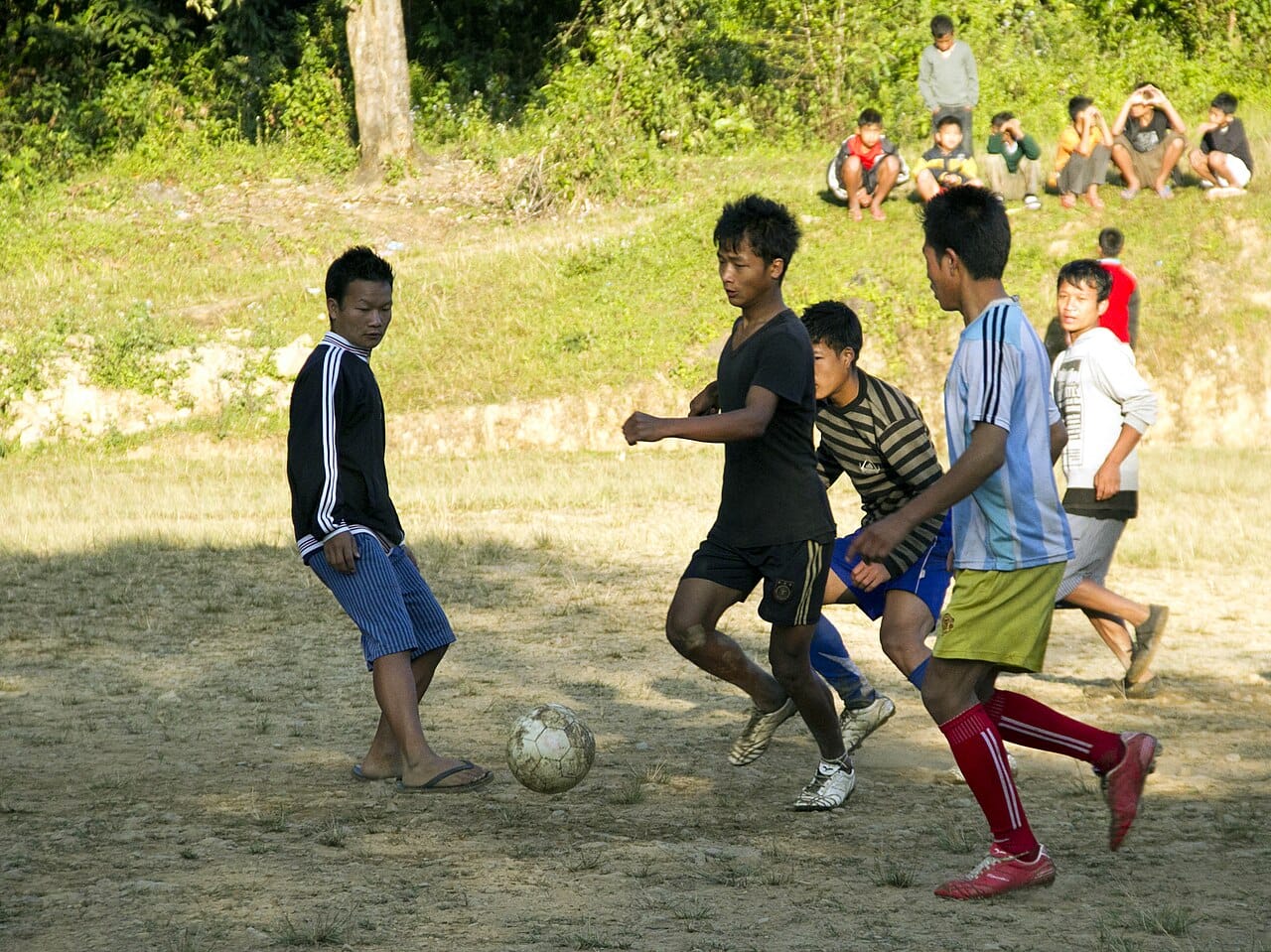
On scrubby neighbourhood pitches, in school playgrounds, on patches of open ground squeezed between houses, the first games of the morning are already under way before Imphal has properly woken up. Kids chase a ball that’s gone soft and lopsided from overuse. Teenagers steal twenty minutes before the school bell. Old rivalries between one lane and the next get replayed in front of an audience of mothers, shopkeepers and whoever else happens to be passing. There are not many places left in Indian sport where football is this unthinking, this woven into the texture of an ordinary day. It isn’t just watched here. It’s spoken, the way a language is spoken, passed down without anyone quite remembering the lesson.
That inheritance has turned Manipur into one of the country’s great sporting production lines. The state has sent champions into arenas far beyond its borders, across more sports than most people could name, but football is the one that beats loudest. Local leagues draw crowds that would embarrass fixtures twice their size elsewhere. Kids grow up idolising players who once lived three streets away. The distance between a Sunday morning kickabout and the Indian national team doesn’t feel like a leap of faith here. It feels like a route someone else has already walked.
And plenty have walked it. Oinam Bembem Devi dragged Indian women’s football somewhere it hadn’t been before her. Jeakson Singh’s header at the FIFA U-17 World Cup is the kind of moment a state builds a mythology around. Naorem Mahesh Singh is the latest to catch the eye, another name added to a list that keeps getting longer, not shorter. NEROCA FC and TRAU FC, meanwhile, have made sure Manipur’s footballing weight isn’t carried by individuals alone; there’s a whole ecosystem behind the highlight reels.
For a tournament that has been quietly narrating Indian football’s story for more than a century, it’s hard to think of a more natural fit.
The Durand Cup was never just a competition. It’s closer to an institution that happens to have goalposts. Run by the Indian Armed Forces, Asia’s oldest football tournament has bent and adapted through the decades without ever quite letting go of where it came from, back in 1888. Services sides still line up alongside big-city clubs and the emerging names of the moment, and generations of players have used it as a proving ground, a place where reputations get made or quietly reconsidered.
So when the tournament pitched up in Imphal for the first time in 2022, it didn’t feel like a new city discovering the Durand Cup. It felt like the Durand Cup finally getting around to a homecoming. The state government all but confirmed as much, declaring a half-day holiday ahead of the Imphal Derby between NEROCA FC and TRAU FC, official recognition that something important was arriving.
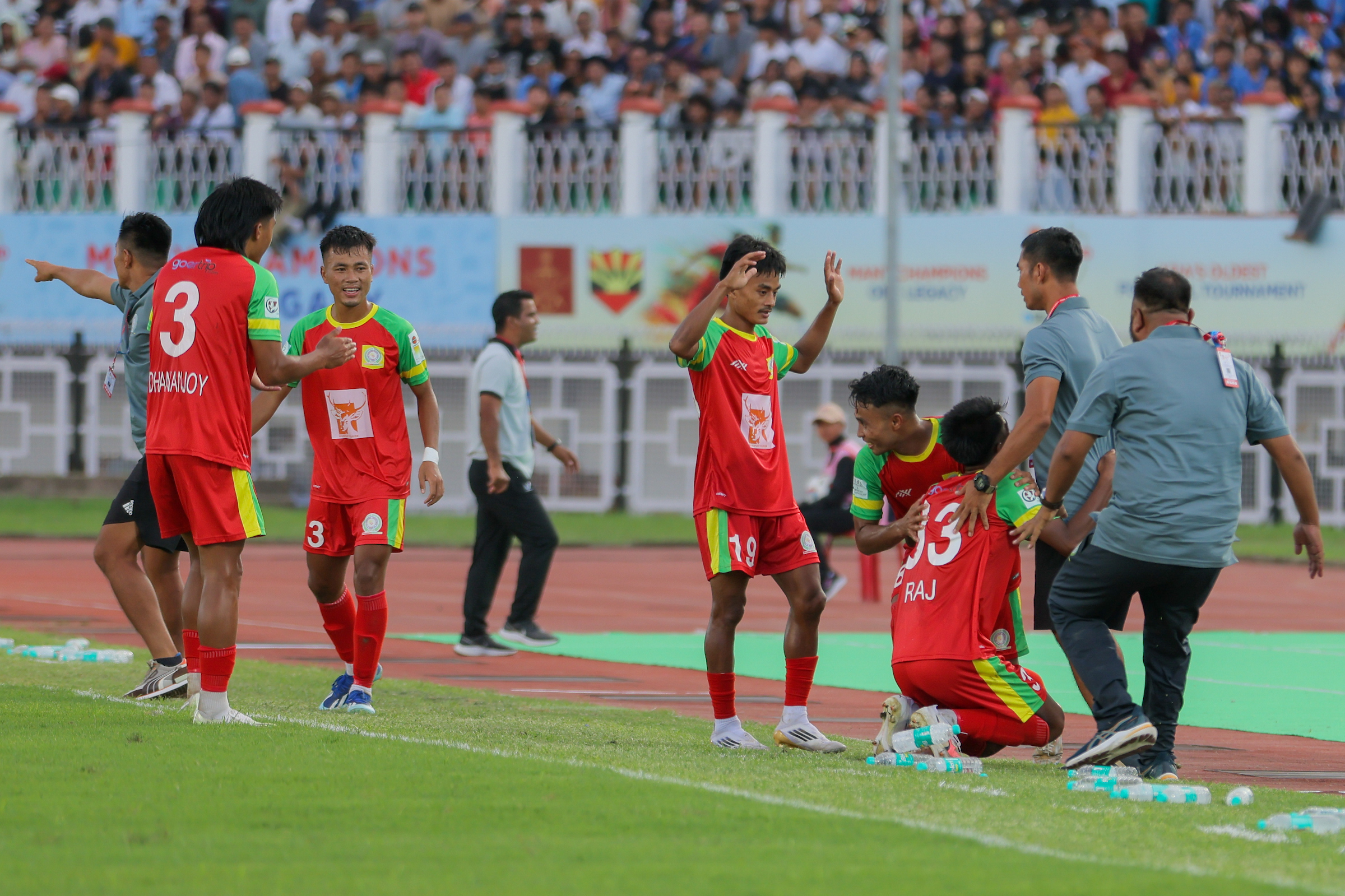
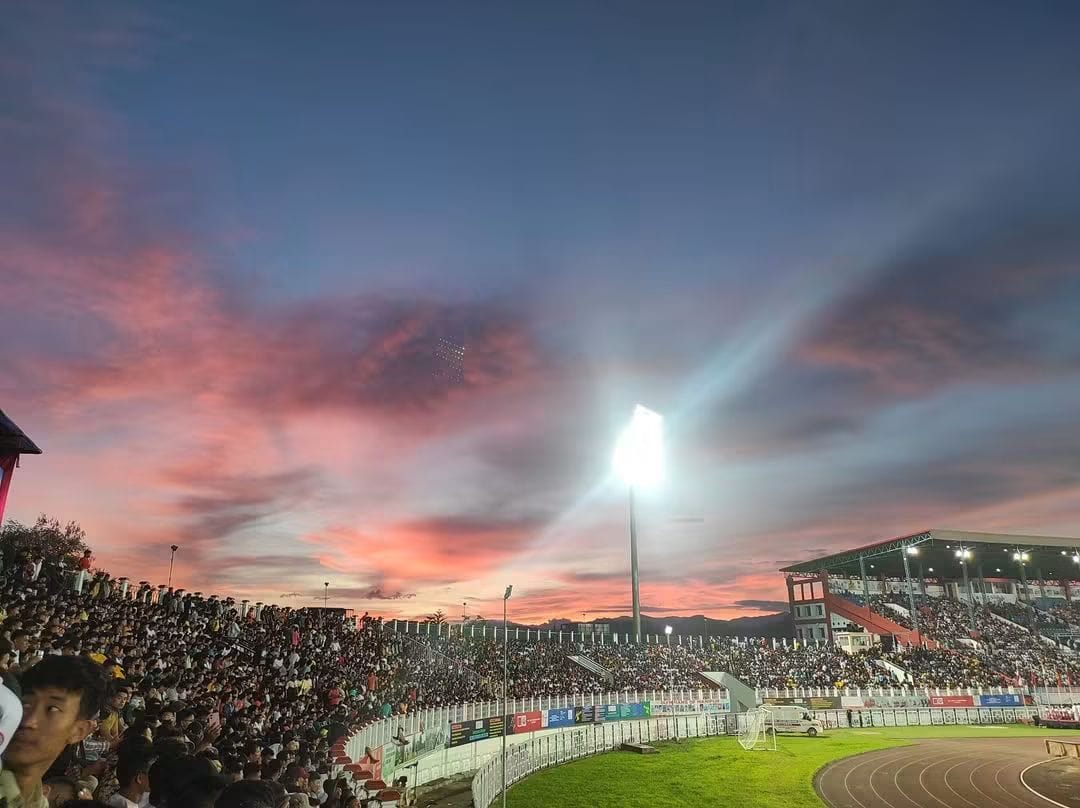
The city didn’t need telling twice. Supporters were streaming toward Khuman Lampak long before kick-off, and by the time the two sides walked out, the stadium had turned into one restless block of colour and noise that simply refused to sit down. Every tackle got a roar. Every attack pulled the crowd forward in its seat. At one point the whole ground fell into a Mexican wave that rolled around and around, an image that outlived the scoreline itself. It wasn’t just a good atmosphere. It was a statement about what the game means here, delivered without anyone having to say a word.
From that night onward, Khuman Lampak stopped being a venue the Durand Cup visited and became one of its landmarks.
Every edition since has followed roughly the same script, which is another way of saying Imphal has never once let the standard slip. Khuman Lampak has become known among the travelling clubs and Services teams as somewhere the crowd doesn’t just watch. It reads the game, applauding a well-timed tackle or a threaded pass with the kind of fluency that only comes from decades of paying close attention. Visiting teams don’t arrive to manufacture an atmosphere. They arrive to find one already waiting.
That’s what makes the relationship work. The tournament doesn’t turn up in Imphal like a circus passing through town; it slots into a football calendar the city already keeps for itself. Few host cities anywhere have folded themselves around the competition this completely, and certainly not this fast.
This time, the tournament returns in its 135th year, a number that quietly does the talking about just how long Asia’s oldest football competition has been going. The 2026 edition kicked off in Kolkata on July 25 with East Bengal and Mohun Bagan renewing their own storied derby, before fanning out across five cities and twenty-four teams under the banner #DeshKaCup. NorthEast United arrive as defending champions, and the road eventually loops back to Kolkata for the final on August 23. For a fortnight in between, though, the tournament’s centre of gravity shifts unmistakably north-east, to Khuman Lampak.
Group D has been drawn up with unmistakably local handwriting: TRAU FC, NEROCA FC and FC Raengdai all thrown in together, with Indian Navy FT completing the set. The group runs from July 28 to August 12, when NEROCA FC and FC Raengdai close out the local leg in another all-Manipur meeting. It’s a group built on grudges and geography as much as tactics: every fixture will matter twice over, once for the table and once for bragging rights that will outlast the tournament.
Fittingly, the Imphal leg opens with the fixture that needs no introduction in this city. TRAU FC and NEROCA FC have only been meeting as an official “Imphal Derby” since the Durand Cup first brought them together in 2022, but it took no time at all to find its edge. That inaugural meeting went NEROCA’s way, 3-1, with an 18-year-old Tangva Ragui announcing himself inside the first ten minutes, thumping a cutback into the roof of the net before TRAU had even settled.
The rivalry has swung back and forth since, NEROCA holding the narrower advantage in head-to-head terms, though TRAU have made a habit of clawing draws out of games that looked beyond them. Last year’s instalment was the best evidence of that: reduced to ten men with almost twenty minutes still to play, TRAU somehow held out until the fifth minute of stoppage time, when NEROCA substitute Arunkumar Singh rose to head home an equaliser that the crowd had been pleading for all afternoon. There is a version of this derby for every mood: one-sided, cagey, backs-to-the-wall. Khuman Lampak has hosted them all. Whatever July 28 brings, it will not be short of tension.
For Manipur, though, the stakes were never only about who tops the group. Every match is another excuse to turn out in the state’s colours, to welcome whoever’s come to town, and to reaffirm something that barely needs reaffirming at this point. For the kids in the stands, it’s more personal still. It’s proof, delivered live, that the players they’re watching once stood exactly where they’re standing, on the same kind of ground, chasing the same kind of ball.
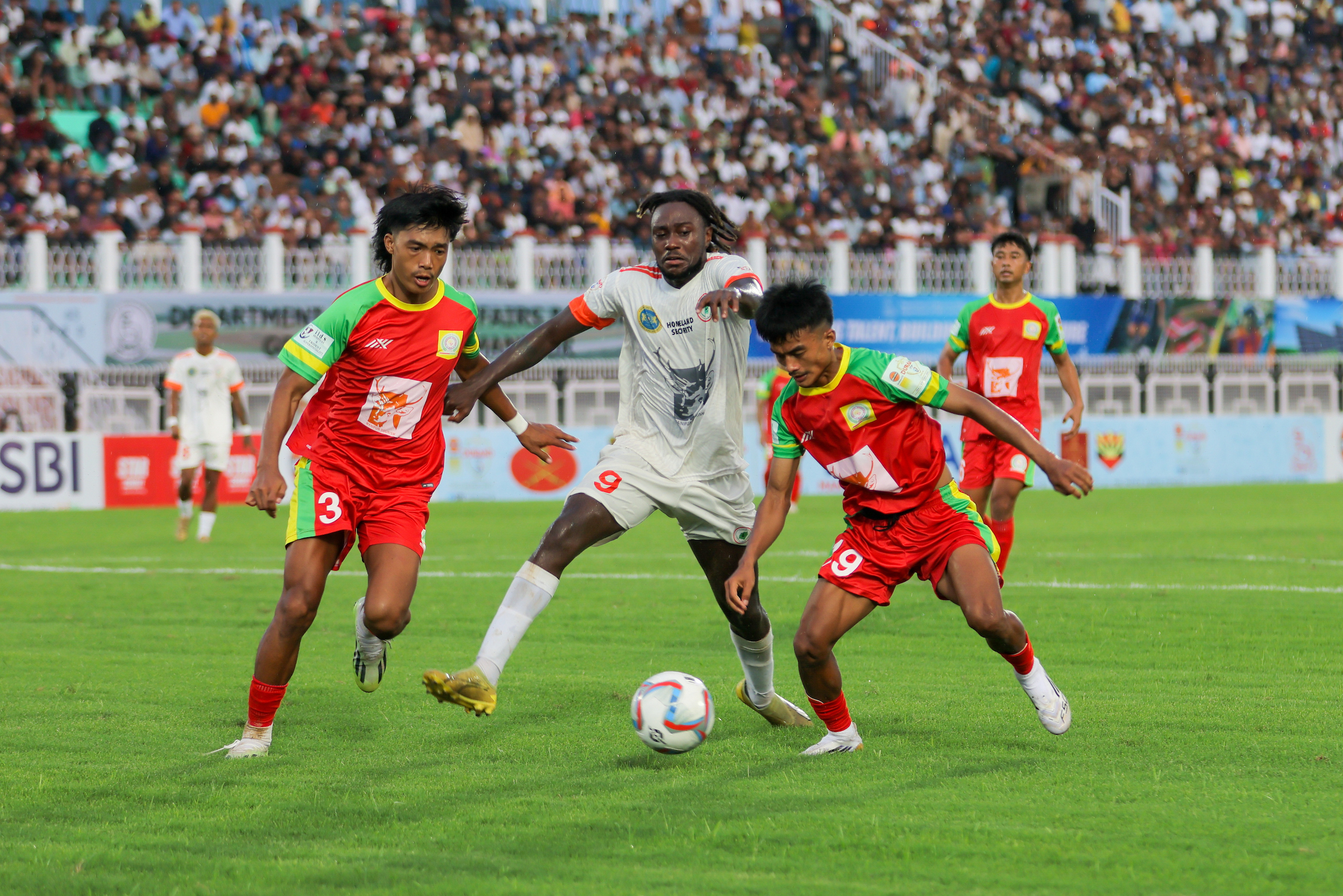
That, in the end, might be the Durand Cup’s quietest but most durable contribution: not the trophy at the end of it, but the doors it keeps propping open, for local leagues, for young players, for a footballing culture that doesn’t need convincing of its own worth but appreciates the platform anyway.
When the teams walk out at Khuman Lampak once more, the eye will naturally drift to the pitch. There’ll be goals, there’ll be needle, there’ll be some kid nobody’s heard of yet who leaves as a name everybody knows. But the real story here was never confined to the ninety minutes.
It’s in the terraces that fill up without fail, year after year. It’s in the pride the city takes in playing host, not as duty but as instinct. It’s in the players still emerging from the same school pitches and neighbourhood grounds where all of this started, long before anyone thought to call it a pipeline. That’s the foundation Manipur’s football culture is built on, and it’s what makes Imphal impossible to leave off the Durand Cup’s map now.
The tournament itself will only stay a few weeks. Football won’t be going anywhere. It’ll still be there in the schools, the local clubs, the patches of open ground, long after the last whistle of this year’s edition. And when Khuman Lampak fills up again, as it always does, it won’t be a reminder that the Durand Cup found a new home. It’ll be a reminder that it found the place football never left.
